What Is Plant Based Milk and What Types Are Available?
Plant based milk is now found in supermarket cartons, café pitchers, and home refrigerators. The name covers drinks made from plants rather than dairy. Common choices include soy, oat, almond, rice, coconut, and pea beverages. They can look similar on a shelf, but their ingredients, flavor, texture, and nutrition vary considerably.
Some options are creamy in coffee; others taste lighter or slightly sweet. Soy and pea drinks often provide more protein than almond or rice varieties, though brands differ. Fortified products may contain calcium, vitamin D, or vitamin B12. Check the nutrition panel and ingredient list, especially if you avoid added sugar or have a food allergy. A carton’s front label rarely tells the full story.
There is no single best choice for every person or recipe. Oat drinks may work well in coffee, while unsweetened soy can suit smoothies and cooking. Rice drinks tend to be mild, and coconut beverages have a distinct flavor. These are useful starting points, not firm rules. The word “milk” can make different products sound interchangeable, but it does not explain their nutritional differences. That can be confusing. This guide explores what plant based milk is, how common types are made, and what to consider when choosing one. It also leaves room for a practical truth: taste matters, and the most nutritious carton may not be the one you enjoy.
Definition and Core Characteristics of Plant-Based Milk
Plant-based milk is a drink made from plant ingredients and water, rather than animal milk. Common bases include oats, soybeans, almonds, rice, and peas. The ingredients are usually soaked, ground, or blended with water, then filtered to create a pourable drink. Some products contain added oil, salt, stabilizers, or sweeteners to adjust texture and taste.
The texture can range from thin and watery to creamy enough for coffee or cereal. Flavor depends on the plant base: oats may taste mild and slightly sweet, while some nut-based drinks have a toasted note. The label can feel broader than it sounds. These drinks are not all nutritionally alike. Protein, fat, and carbohydrate levels vary by ingredient and recipe, and some are fortified with nutrients such as calcium or vitamin D. Check the nutrition label if those details matter to your diet.
“Milk” describes how the drink is used, not an identical nutrient profile. Unsweetened versions may taste less sweet than expected. Some separate in hot drinks or leave a faint grainy feel; shaking the carton can help, though not always. For a home-made version, blended oats and water can be strained through a fine cloth, but the result may be thinner and less consistent than a packaged drink.
Plant-Based Milk: Protein by Type
Plant-based milk is a non-dairy beverage made from sources such as legumes, grains, nuts, or seeds. Soy beverages typically provide more protein than other common types. Values shown are approximate grams per 240 mL serving; nutrition varies by recipe and product.
How Plant-Based Milk Is Made
Plant-based milk begins with a plant ingredient such as oats, soybeans, almonds, or rice. The ingredient is cleaned and, when needed, soaked to soften it. It is then ground with water, releasing starches, proteins, oils, and other soluble components. Picture a pale, cloudy mixture swirling in a steel tank. The liquid is separated from much of the solid pulp, often through screens or filters. Not every base behaves alike. Oats can become thick, while nuts leave fine particles that need careful filtering. The details vary.
Commercial production may include blending, homogenizing, and heat treatment. Homogenizing breaks fat droplets into smaller ones, helping the drink stay evenly mixed. Heat treatment can reduce harmful microbes and extend shelf life, but the method depends on the product and packaging. Some recipes also add calcium, vitamins, or ingredients that improve texture. These choices affect nutrition and mouthfeel, so checking the ingredient and nutrition labels is useful. At home, the process is simpler: blend and strain, then refrigerate the drink and use it promptly. A jar may separate overnight. That is normal, though homemade versions can feel grainy or watery; getting the texture right is not always easy.
Major Types of Plant-Based Milk and Their Ingredients
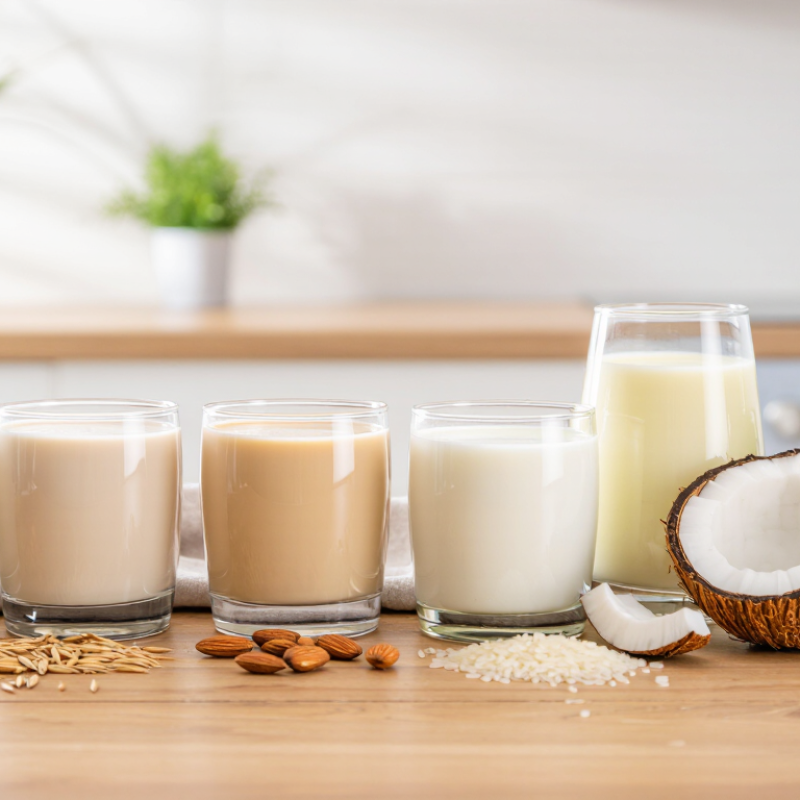
Plant-based milk is a water-based drink made from legumes, grains, nuts, or seeds. Soy milk uses soybeans and water; some versions add oil, calcium, or vitamins. Oat milk often contains oats, water, and added oil. Enzymes may convert oat starch into simpler sugars during processing. Almond milk starts with ground almonds and water, then filtering removes much of the solid pulp. Pea milk usually relies on pea protein, while rice drinks use milled rice and water. Coconut-based drinks have a richer taste and a different fat profile. Recipes vary.
The Good Food Institute’s 2023 U.S. retail sales report valued plant-based milk sales at $2.8 billion, about 15% of milk-category dollar sales. That figure shows the category’s market presence, not that every drink matches dairy nutritionally. Fortification can add calcium, vitamin D, or B12, but amounts differ by product. Labels matter. I find ingredient lists easy to skim past, even though oils, gums, and added sugars can change a drink’s taste and texture. Protein also varies: soy and pea options often provide more than almond or rice drinks, but check the nutrition panel rather than relying on the front label.
Nutritional Differences Among Plant-Based Milk Types
Plant-based milks can look similar in a glass, but their nutrition varies with the main ingredient and added nutrients. Soy milk usually provides protein closer to cow’s milk than many other plant options. Almond milk is often low in protein, while oat milk tends to contain more carbohydrates. Coconut milk drinks may contain more saturated fat, though products differ.
Labels matter. Compare amounts per cup, especially protein, added sugars, calcium, vitamin D, and vitamin B12. Fortification can make two similar-looking cartons nutritionally quite different. Unsweetened versions usually contain less added sugar, but they may taste less familiar in coffee or cereal. Small details count.
A practical choice depends on what else you eat. Someone relying on a milk alternative for protein may prefer a higher-protein option, while a person with nut allergies needs to check ingredients carefully. No single type is best for everyone. I can still misread a label when serving sizes differ, so comparing like with like is worth the extra moment. Calcium content, for example, may vary widely between products, even within the same type.
Common Uses and Factors for Choosing a Plant-Based Milk
Plant-based milk includes drinks made from soy, oats, almonds, peas, rice, and other plant ingredients. Their flavor and texture affect everyday use. Oat milk often gives coffee a creamy feel, while thinner rice or almond drinks suit cereal and smoothies. Soy’s fuller body can work well in sauces and baking. Results vary by recipe.
Nutrition deserves a label check. The 2020–2025 U.S. Dietary Guidelines identify fortified soy beverages as a dairy-group option; other plant drinks may differ substantially in protein and nutrients. Compare protein, calcium, vitamin D, added sugars, and ingredient lists per serving. A sweetened drink may taste pleasant in coffee but change the sugar content of breakfast. Small details matter.
Price and packaging matter, too. Good Food Institute and SPINS reported U.S. plant-based milk retail sales of $2.8 billion in 2023, showing how widely these products are used. Choose cartons that fit your household’s pace, since opened products need refrigeration and may spoil before use. For cooking, test a small amount first: flavored or sweetened varieties can alter soups, pancakes, and sauces. There is no perfect choice. The best fit depends on taste, nutrition needs, budget, and how you actually use it.