


Careers

How to Source Plant Based Innovation in 2026?

Sourcing plant based innovation in 2026 will require more than finding attractive products. It will require disciplined questions, reliable evidence, and practical testing. Buyers should examine ingredient origins, processing methods, nutrition data, packaging impacts, and supplier capacity before making commitments. A polished sample proves very little. The real test begins when production moves from a pilot kitchen to a busy factory line.

Experienced sourcing teams often start with a clear consumer problem. Can the product improve taste, affordability, nutrition, or convenience? They then compare suppliers through documented specifications, third-party testing, traceability records, and responsible labor practices. Local crop availability may reduce transport risks, while diversified sourcing can protect against droughts and price volatility. However, no supply chain is completely resilient. That uncomfortable fact deserves attention.

In 2026, strong partnerships will matter as much as clever formulations. Suppliers should explain their cultivation systems, allergen controls, quality procedures, and scale-up limitations. Buyers should request realistic timelines, not optimistic promises. Small sensory trials can reveal bitterness, poor texture, or unstable color before major investment begins. Some sustainability claims may sound impressive but remain difficult to verify. Independent assessments and transparent methodologies can separate measurable progress from marketing language.

The best approach is curious, cautious, and commercially grounded. Plant based innovation should serve people, farmers, manufacturers, and the wider environment. It should also admit where evidence is incomplete. That honesty creates better decisions, stronger relationships, and innovations capable of surviving beyond the launch campaign.
How to Source Plant Based Innovation in 2026?

Define Plant-Based Innovation Goals and Sourcing Criteria

Plant-based innovation begins with a precise business goal, not a fashionable ingredient. Define whether you need better protein quality, cleaner labels, lower water use, or improved texture. Put one primary outcome on paper. Keep secondary goals visible, but do not let them compete.

A useful brief names the product format, target consumer, serving size, cost ceiling, and launch market. It also states what cannot change. For example, a chilled snack may require stable texture after four weeks. That detail changes the sourcing conversation. Keep it measurable.

Sourcing criteria should combine technical evidence and practical experience. Ask suppliers for ingredient specifications, allergen controls, traceability records, and recent test results. Request samples from different production batches. Performance can shift with season, processing, and storage. It happens. Test hydration, flavor, color, shear, and shelf life in the finished application. A powder that works in a laboratory cup may fail in a factory mixer. Document every adjustment, including water temperature and mixing time. Independent laboratory checks can support nutritional and safety claims, but internal notes still matter.

Score candidates against weighted criteria before enthusiasm takes over. I usually give functionality and supply reliability higher weight than novelty. Yet this approach can miss a valuable early-stage solution. Review the scoring model with procurement, food science, quality, and sustainability specialists. Check whether evidence is current and comparable. Be willing to question attractive claims. “Natural” is not a technical specification. Ask what the data proves, and what remains uncertain. Pilot results should trigger another question, not automatic approval.

Map Emerging Technologies, Ingredients, and Solution Providers

How to Source Plant-Based Innovation in 2026?

Sourcing plant-based innovation now requires a technology map, not a supplier list. Start by separating platforms: extrusion for familiar textures, biomass fermentation for mycelium structures, and precision fermentation for functional proteins. Track each platform by maturity, energy demand, scalability, and regulatory status. The Good Food Institute reported approximately $1.6 billion invested in alternative proteins during 2023, down 44% from 2022. This signals a tougher market. Evidence matters more than impressive prototypes.

Ingredients need their own map. Compare pulses, oilseeds, grains, algae, and fermentation-derived components by protein quality, allergen profile, water use, and seasonal reliability. Ask for batch-level specifications, not broad sustainability claims. The FAO’s State of Food and Agriculture 2023 estimated agrifood systems create 31% of global human-caused greenhouse gas emissions. Therefore, ingredient sourcing should include farm practices, processing energy, transport distance, and land-use risks.

Solution providers should be screened through small, measurable trials. Request a 10-kilogram sample, a technical data sheet, and three months of supply records. Test taste after freezing, reheating, and storage. Weak texture often appears later. The map will be imperfect. Supplier databases become outdated quickly, especially for emerging fermentation systems. Buyers should record failed trials, unresolved regulatory questions, and unavailable cost data. That uncomfortable evidence can prevent expensive commitments in 2026.

How to Source Plant Based Innovation in 2026? - Map Emerging Technologies, Ingredients, and Solution Providers
Innovation Area Technology or Ingredient Primary Functional Role Typical Applications Commercial Maturity Key Sourcing Criteria Main Technical Constraints Relevant Verification Data
Alternative Proteins Pea, fava bean, and soybean protein concentrates or isolates Protein enrichment, emulsification, water binding, and texture development Meat alternatives, sports nutrition, dairy alternatives, baked foods, and ready meals Commercially established Protein content, solubility, particle size, flavor profile, allergen status, crop origin, and supply continuity Beany or bitter notes, chalkiness, limited solubility at some pH levels, and potential allergen-management requirements Protein percentage, amino-acid profile, digestibility, sensory results, microbiological specifications, and contaminant testing
Alternative Proteins Mycoprotein produced through fungal fermentation Fibrous texture, protein delivery, moisture retention, and satiety Meat-free fillets, mince-style products, chilled meals, and frozen foods Commercially established to scaling Fermentation substrate, biomass consistency, texture after thermal processing, production capacity, and regulatory status Strain-specific allergen considerations, processing sensitivity, color control, and cost competitiveness Protein and fiber content, nucleic-acid control, allergen assessment, shelf-life data, and process-validation records
Precision Fermentation Microbial production of specific dairy or egg proteins Functional proteins for foaming, gelation, emulsification, and creaminess Animal-free dairy products, baked foods, whipped products, sauces, and nutrition products Early commercial to scaling Target-protein purity, fermentation yield, downstream recovery, regulatory pathway, and ingredient cost Scale-up economics, purification requirements, labeling rules, consumer acceptance, and allergen equivalence for some proteins Protein identity, purity, residual host-cell material, production-organism assessment, stability, and jurisdiction-specific approvals
Cultivated Plant Biomass Plant cell culture for high-value flavors, colors, or functional compounds Consistent production of botanical compounds independent of seasonal harvests Natural colors, flavor extracts, cosmetic ingredients, nutraceuticals, and specialty foods Pilot to early commercial Target-compound concentration, culture productivity, extraction yield, identity testing, and scale-up pathway High production cost, long development cycles, complex downstream processing, and limited food-scale capacity Compound authentication, batch-to-batch variation, heavy-metal testing, pesticide status, and toxicological assessment
Oil and Fat Systems High-oleic plant oils and structured plant-based fats Flavor delivery, mouthfeel, cooking stability, and solid-fat functionality Plant-based meat, spreads, bakery, confectionery, sauces, and frozen desserts Commercially established Fatty-acid profile, oxidative stability, melting behavior, deodorization level, traceability, and processing compatibility Oxidation, waxiness, poor solid-fat structure, off-notes, and variation caused by crop and refining conditions Peroxide value, anisidine value, fatty-acid composition, melting curve, shelf-life testing, and contaminant screening
Fiber and Texturization Citrus fiber, oat fiber, bamboo fiber, and other plant-derived hydrocolloid systems Water management, viscosity, suspension, binding, and clean-label texture enhancement Plant-based dairy, sauces, bakery, meat alternatives, beverages, and reduced-fat products Commercially established Hydration rate, water-holding capacity, viscosity profile, sensory neutrality, particle size, and processing tolerance Batch variability, excessive viscosity, gritty mouthfeel, flavor carryover, and interactions with proteins or minerals Dietary-fiber content, rheology curves, water activity, particle-size distribution, microbiology, and sensory evaluation
Natural Color and Flavor Anthocyanins, betalains, carotenoids, chlorophyll derivatives, and botanical extracts Color replacement, visual differentiation, flavor development, and label simplification Beverages, confectionery, dairy alternatives, sauces, snacks, and bakery products Commercially established with ongoing innovation Shade range, pH stability, light and heat tolerance, solvent system, dosage, and geographic supply risk Color fading, pH sensitivity, interaction with minerals, flavor impact, and variable raw-material composition Color measurement, stability under light and heat, identity testing, residual-solvent data, and regulatory compliance
Upcycled Ingredients Fiber, protein, and flour derived from fruit, vegetable, cereal, or pulse side streams Waste reduction, fiber enrichment, flavor development, and partial replacement of conventional ingredients Snack foods, bakery, beverages, nutrition bars, soups, and meat alternatives Commercial to scaling Feedstock consistency, collection radius, drying method, contaminant controls, seasonality, and traceability Variable composition, moisture control, microbial risk, color variation, and limited year-round availability Mass-balance documentation, moisture and water activity, nutritional analysis, pesticide testing, microbiology, and life-cycle data
Bioprocessing Solid-state and submerged fermentation of legumes, grains, and plant substrates Flavor improvement, protein digestibility, reduced antinutritional factors, and natural preservation Protein ingredients, savory bases, condiments, snacks, beverages, and functional foods Commercially established to scaling Microbial culture control, fermentation time, substrate specification, sensory profile, and process reproducibility Batch variation, contamination risk, strong flavors, process validation, and regulatory requirements for cultures or metabolites Microbial identity, pH, acidity, biogenic amines, mycotoxins, digestibility, and validated kill-step information
Digital Formulation Artificial intelligence-assisted formulation and ingredient-substitution platforms Faster prototyping, cost optimization, sensory prediction, and replacement of animal-derived inputs New product development, reformulation, allergen reduction, nutrition optimization, and scale-up support Commercially available and expanding Quality of formulation datasets, compatibility with laboratory workflows, intellectual-property terms, and explainability Limited training data, inaccurate predictions outside known ingredient ranges, data ownership issues, and need for physical validation Model validation, prediction error, controlled sensory tests, pilot-batch performance, ingredient specification matching, and audit trails
Processing Equipment High-moisture extrusion and shear-cell texturization Creation of layered, fibrous, and meat-like structures from plant proteins Whole-cut alternatives, fillets, chunks, mince, and hybrid protein products Commercially established to scaling Throughput, die configuration, energy use, protein compatibility, cleaning requirements, and pilot access High capital expenditure, formulation sensitivity, scale-up differences, and texture loss during freezing or reheating Texture profile analysis, shear force, water-holding capacity, cooking loss, throughput, energy intensity, and shelf-life results
Sustainable Packaging Fiber-based, cellulose-based, and bio-based barrier packaging systems Reduction of fossil-based plastic use while maintaining protection against oxygen, moisture, and grease Dry foods, chilled foods, beverages, snacks, and takeaway formats Commercial to scaling Barrier performance, food-contact compliance, recyclability or compostability route, sealing behavior, and supply capacity Moisture and oxygen sensitivity, recycling-infrastructure limitations, heat-seal performance, and end-of-life ambiguity Oxygen and water-vapor transmission rates, migration testing, seal strength, shelf-life data, and independently reviewed life-cycle assessment
Sourcing priority should be assessed across technical performance, regulatory readiness, supply resilience, cost at scale, sensory acceptance, and independently verified environmental data.

Evaluate Suppliers Through Science, Safety, and Sustainability

How to Source Plant Based Innovation in 2026?

Evaluate Suppliers Through Science, Safety, and Sustainability

Plant-based sourcing now demands more than attractive samples and persuasive sales decks. The Good Food Institute reported that global plant-based retail sales exceeded $29 billion in 2023. Growth creates pressure to approve suppliers quickly. That pressure can weaken judgment. Procurement teams should request amino acid profiles, protein digestibility data, processing conditions, and independent laboratory results. A smooth texture is useful, but it proves very little.

Safety evidence must follow the ingredient through every processing stage. Ask for allergen controls, pathogen testing, heavy-metal screening, pesticide documentation, and batch-level traceability. Review the supplier’s recall history and corrective-action records. Short audits are not enough. Site visits reveal practical details, such as dusty filling lines or poorly labelled storage bins. The International Organization for Standardization recommends life-cycle assessment methods through ISO 14040 and ISO 14044. Use them consistently.

Sustainability claims need a clear functional unit. Compare emissions per kilogram of usable protein, not merely per kilogram of raw material. A 2018 Science study found major environmental differences between animal proteins and lower-impact plant sources. Yet supplier-specific results can vary widely. Farming methods, transport, yield, and energy use matter. Request primary data before accepting broad claims. Some suppliers will not have perfect records. That is a warning, not an automatic rejection. Require an improvement plan, measurable milestones, and an honest explanation of data gaps. Credibility grows through evidence, including uncomfortable evidence.

Validate Prototypes, Claims, Costs, and Supply Chain Readiness

How to Source Plant Based Innovation in 2026?

A promising plant-based prototype needs more than a clean ingredient list. Test the bite. Run blind sensory panels with target consumers, then repeat after chilled storage. Texture often changes by day fourteen. The Good Food Institute’s 2024 State of the Industry report shows continued investment in plant-based foods, but slower category growth in several mature markets. That makes repeat purchase more important than launch excitement. Measure purchase intent, cooking performance, protein content, and waste from each pilot batch.

Claims require stronger evidence than attractive packaging. “High protein,” “source of fibre,” and sustainability statements need verified calculations and documented ingredient specifications. The European Commission’s 2024 food waste monitoring work reinforces a practical concern: production losses should be measured, not estimated casually. Build a claim file containing laboratory results, formulation tolerances, supplier certificates, and approved wording. Small errors matter. A recipe change can invalidate an old claim.

Cost and supply chain readiness should be tested together. The OECD-FAO Agricultural Outlook 2024–2033 highlights exposure to weather, energy, trade, and commodity-price volatility across food systems. Request twelve-month pricing scenarios, minimum order quantities, lead times, allergen controls, and backup sources. Then manufacture a pilot using ordinary factory equipment. Not a perfect lab setup. If the product only works with specialist handling, the commercial model is still fragile. Early estimates may be wrong; that is useful. Record why, revise the model, and challenge every optimistic assumption.

Build Partnerships and Scale Proven Plant-Based Solutions

How to Source Plant Based Innovation in 2026?

Build Partnerships and Scale Proven Plant-Based Solutions

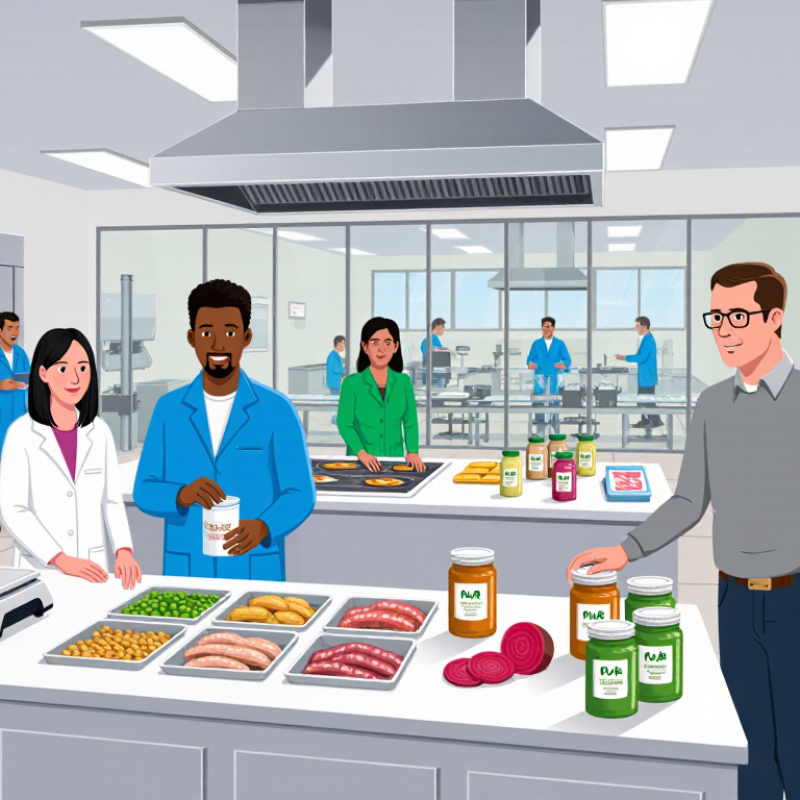
Plant-based innovation should begin with a defined consumer problem, not a fashionable ingredient. A sourcing team can map taste, texture, nutrition, cost, and supply requirements before meeting potential partners. Small pilot batches reveal practical issues early, such as dryness after refrigeration or weak structure during cooking. These details matter.

Strong partnerships combine complementary expertise. Ingredient developers may understand functionality, while manufacturers know equipment limits and production economics. Food scientists can test stability, sensory performance, and nutritional claims under controlled conditions. Independent laboratories should verify safety, composition, allergens, and shelf-life data. Reliable evidence is more useful than impressive samples.

Scale only after repeated validation. A promising prototype should perform consistently across batches, factories, and storage conditions. Partners need clear specifications, shared testing methods, and realistic volume forecasts. Contracts should also address traceability, quality controls, and responsible sourcing practices. The process is not perfectly linear. Some solutions pass a tasting panel but fail at commercial speed. Others meet cost targets but lose their texture after transport. That failure is useful, if teams record it honestly and adjust the brief. Regular technical reviews can prevent enthusiasm from replacing evidence. Small compromises may be necessary, but core quality should remain measurable. Premium performance is not always required. Consistent performance is.