


Careers
Top 10 Organic Lifestyle Products for Global Sourcing
Global sourcing is reshaping how retailers discover organic lifestyle products. Buyers now look beyond attractive packaging and low prices. They want safer materials, responsible production, and dependable delivery. This guide introduces ten product categories with practical sourcing value. Examples include organic cotton towels, bamboo kitchenware, natural skincare, reusable food wraps, and low-impact home textiles. Each item reflects changing consumer expectations.
Reliable sourcing begins with evidence. Suppliers should provide current certificates, factory details, material specifications, and testing records. Certifications such as GOTS, USDA Organic, and COSMOS may support different product claims. Their relevance depends on the product, market, and supply chain stage. Buyers should also check labeling rules, restricted substances, packaging requirements, and import standards in each destination country. A polished catalog is not proof.
Small details matter. Ask where the cotton was grown. Request batch numbers. Review audit dates. Inspect stitching, seals, scent, and surface finish. A sample may look excellent while bulk production differs. No supplier is perfect. This guide cannot remove every risk. However, it can encourage clearer questions and better decisions. The strongest partnerships combine transparent communication, realistic order quantities, ethical labor expectations, and consistent quality control. Global sourcing should not chase “organic” as a fashionable label alone. It should connect verified materials with useful design, responsible manufacturing, and long-term customer trust.
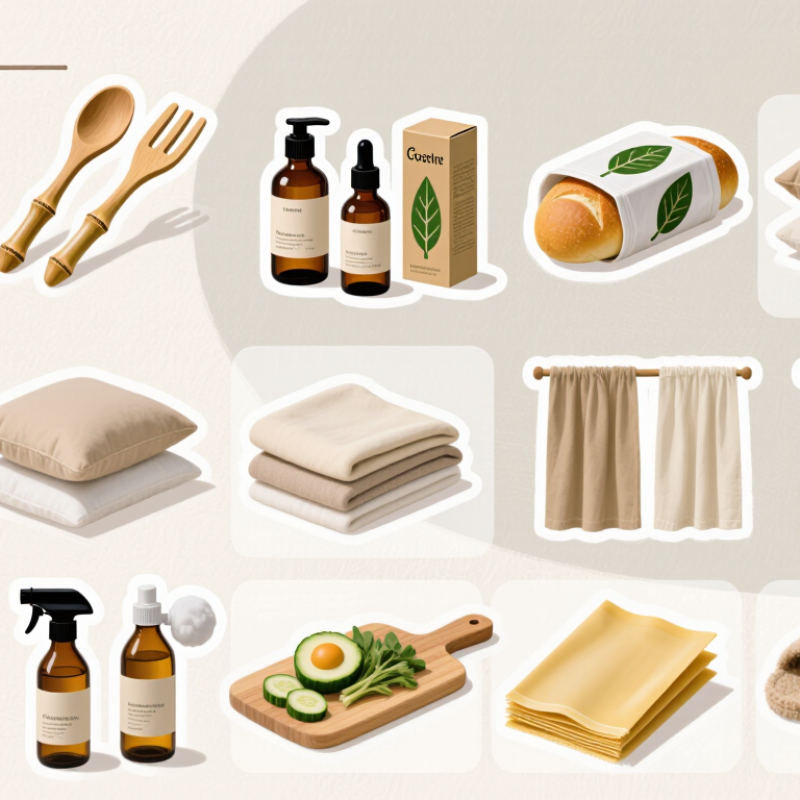
Organic Lifestyle Sourcing: A €134.8 Billion Global Market Overview
The €134.8 billion estimate points to the scale of global demand for organic lifestyle products. Yet market totals depend on what researchers include: personal care, textiles, household goods, or food-related items. Treat the figure as an overview, not a precise measure of every product category.
For sourcing teams, the opportunity is tangible. Think organic cotton towels with traceable fiber records, or household cleaners supported by ingredient documentation. Ask suppliers for current certificates, test reports, and clear production details. Check that claims apply to the finished product, not just one ingredient. Small paperwork gaps matter.
There is no perfect supplier. A certificate may confirm a standard, but it cannot show every detail of working conditions or transport impacts. Request audit dates and lot-level records, then verify them independently where practical. Organic materials can also cost more and face seasonal supply swings. That can disrupt plans. Buyers should compare total costs, not only unit prices, and leave room to question assumptions. A sourcing decision is stronger when evidence, product performance, and realistic delivery terms all align.
The 10 Product Categories and Their Organic Certification Requirements
For food, tea, and spices, verify certification under the destination market’s organic rules. Ask for current certificates, product schedules, and transaction records. Cotton apparel and home textiles need fiber-content evidence and traceable processing records; textile schemes may cover different production stages. Check the certificate’s scope, not just its logo. Small details matter.
Skincare, haircare, soaps, and cleaning products require closer claim checks. “Organic” may apply only to certain ingredients, not the finished formula. Confirm ingredient percentages, approved processing methods, and whether the certifier covers the actual product. Essential oils need botanical identification and batch traceability; an organic farm certificate alone may not certify the oil. Paper goods and gardening products also vary: some standards cover raw materials, while others assess the finished item or specific inputs.
For pet products, distinguish organic ingredients from a certified final product. Across all ten categories, compare certificate validity, facility names, product codes, and supply-chain coverage. Requirements differ by country and product type, so confirm them with the relevant regulator or accredited certifier before shipping. I have seen paperwork look complete while leaving one processor unlisted. That gap is easy to miss. Organic wording should match the evidence on file, even when a broader claim would sell better.
| # | Product Category | Typical Products | Relevant Organic Standard or Certification | Key Requirements and Sourcing Checks |
|---|---|---|---|---|
| 1 | Organic food and beverages | Grains, coffee, tea, spices, oils, dried fruit, and packaged foods | For the United States, USDA National Organic Program (NOP); for the European Union, EU organic rules under Regulation (EU) 2018/848. Other markets have their own organic regulations. | Verify that the operation and product are certified or otherwise eligible under the destination market’s rules. Check scope, ingredient status, handling and processing controls, traceability, and applicable labeling requirements. Imported products may need to meet the destination market’s recognized equivalence or compliance arrangements. |
| 2 | Organic cotton apparel | T-shirts, shirts, underwear, socks, and casual clothing | Global Organic Textile Standard (GOTS) or Organic Content Standard (OCS) for textile supply-chain claims; agricultural certification applies to the cotton crop. | Confirm the standard’s required organic-fiber content and certification scope. GOTS also covers defined processing, environmental, and social criteria; OCS focuses on verifying and tracking organic material content. Check transaction documentation and chain of custody for the finished goods. |
| 3 | Organic home textiles | Bedding, towels, curtains, blankets, and table linens | GOTS or OCS may be used for certified organic textile content. The applicable agricultural organic standard covers the source fiber. | Check fiber composition, processing-stage certification, product scope, and traceability from certified fiber through the finished article. Do not assume that a certified fiber alone certifies every dyeing, finishing, or manufacturing claim. |
| 4 | Organic wool products | Wool garments, yarn, throws, and blankets | Applicable agricultural organic rules may cover livestock and wool production; GOTS or OCS may cover qualifying textile products and chain-of-custody claims. | Confirm that the relevant farm or livestock operation is certified under a recognized organic program where required. Verify fiber-content documentation and textile processing scope. Organic status does not automatically certify animal-welfare or environmental claims beyond the standard’s stated criteria. |
| 5 | Organic skincare and cosmetics | Creams, lotions, balms, facial oils, and cleansers | There is no single global organic certification system for cosmetics. Private standards such as COSMOS or NATRUE may be used; agricultural ingredients may also need certification under the relevant food or farming organic rules. | Review the exact standard and product certificate. Requirements can address ingredient origin, permitted processing, formulation, and labeling, but thresholds differ by standard and product type. Check whether the claim applies to the whole product or only specified ingredients; organic certification does not replace cosmetic safety and market-registration requirements. |
| 6 | Organic essential oils | Lavender, peppermint, citrus, and other botanical oils | Certification under the destination market’s agricultural organic program may apply to the botanical crop and processed oil. COSMOS or another applicable cosmetics standard may be relevant when the oil is sold as a cosmetic ingredient or product. | Verify the certified crop, extraction or processing scope, ingredient identity, and lot-level traceability. Check whether the oil is sold for food, cosmetic, or other use, as the applicable regulatory and labeling rules differ by intended use and market. |
| 7 | Organic personal-care products | Soaps, shampoos, conditioners, and body washes | Cosmetic standards such as COSMOS or NATRUE may provide organic-content and formulation criteria; there is no universal global organic label for personal-care products. | Ask for the current certificate, covered product list, and ingredient documentation. Confirm how the standard calculates organic content and treats water, minerals, and processed ingredients. Check that product claims comply with local cosmetic labeling rules and are not broader than the certification supports. |
| 8 | Organic household cleaning products | Laundry detergents, dishwashing liquids, and surface cleaners | Organic certification for cleaning products is not harmonized globally. Private standards may assess organic ingredients, biodegradability, or formulation, but these are not interchangeable with government food-organic certification. | Identify the exact scheme and its criteria before making a purchasing or labeling claim. Request evidence for any certified organic ingredients and review the full ingredient and safety documentation. Avoid treating “natural,” “plant-based,” or “biodegradable” as equivalent to “certified organic.” |
| 9 | Organic bedding and mattresses | Mattresses, pillows, mattress toppers, and duvets using cotton, wool, or other fibers | GOTS or OCS may certify qualifying textile components or products. Organic certification of agricultural fibers is separate from certification of the complete mattress or bedding item. | Check certificates for each claimed organic textile component and verify whether the finished-product assembly is within the certificate’s scope. Request material specifications for fillings, covers, and other components; do not assume that an organic cover makes the entire mattress organic. |
| 10 | Organic seeds and gardening products | Vegetable and herb seeds, and inputs marketed for organic farming or gardening | Seed certification and organic production rules depend on the destination market. Agricultural input approval is separate: an input must be permitted under the applicable organic production rules to be used on a certified operation. | Verify seed variety, production status, and the applicable organic certificate or documentation. For fertilizers, soil amendments, and pest-control inputs, check the destination market’s allowed-input requirements and any required review; “organic” in a product name does not by itself prove that an input is permitted for certified production. |
Sustainable Packaging and Traceability Across Global Supply Chains
Top 10 Organic Lifestyle Products for Global Sourcing
Sustainable packaging and traceability start with practical questions: What is each item wrapped in, and where did its materials come from? A recycled-paper sleeve may look responsible, yet coatings or mixed materials can complicate recovery. OECD’s Global Plastics Outlook reports that the world generated 353 million tonnes of plastic waste in 2019; only 9% was ultimately recycled. Small packaging choices matter.
Ask suppliers for packaging specifications, material percentages, and batch-level records linking farms, processors, and finished goods. Keep certificates and transaction documents tied to specific lots, not just supplier profiles. A QR code helps shoppers access information. It is not proof by itself. Records still need checking, and gaps between farms and processors can be hard to spot.
Test packaging in real shipping conditions. A lightweight carton that arrives crushed may create more waste through replacements. The World Bank’s What a Waste 2.0 estimated 2.01 billion tonnes of municipal solid waste annually, with at least 33% not managed in an environmentally safe way. That figure covers all waste, not packaging alone. Still, it reminds sourcing teams to measure what happens after delivery. Track damage, packaging weight, recycled content, and recovery options by product and destination. Some supplier data will remain incomplete; say so clearly rather than presenting traceability as perfect.
Supplier Evaluation Using USDA, EU Organic, and GOTS Standards
For global sourcing, evaluate organic lifestyle products against the standard relevant to each material. USDA Organic and EU Organic rules cover agricultural ingredients and production; GOTS applies to qualifying textile products and processing. They are not interchangeable. FiBL and IFOAM’s The World of Organic Agriculture 2024 reports 96.4 million hectares of organic farmland worldwide in 2022, showing the scale of certified production—but not proving that every finished product is responsibly made.
Ask suppliers for current certificates, product scope, facility details, and transaction documents. Check that the listed company, site, and material match the goods offered. For GOTS textiles such as towels or bedding, verify the finished product’s scope, not just a cotton supplier’s certificate. For products containing organic plant ingredients, compare ingredient records with USDA or EU requirements. Small details matter. A certificate can still leave blind spots: subcontracting, mixed lots, and inconsistent paperwork deserve follow-up. The 2024 FiBL and IFOAM report also recorded €135 billion in global organic retail sales for 2022, but market growth is not a substitute for supplier checks. Keep a sample, compare its label with the documentation, and record gaps before approving a purchase. Some records will be imperfect; note what remains unverified rather than assuming.
Market Priorities: Why U.S. Organic Sales Reached $67.6 Billion in 2023
Top 10 Organic Lifestyle Products for Global Sourcing
Market Priorities: Why U.S. Organic Sales Reached $67.6 Billion in 2023
U.S. organic sales reached $67.6 billion in 2023, according to the Organic Trade Association’s 2024 Organic Industry Survey. Organic food generated $63.8 billion, while non-food products contributed $3.8 billion. The market grew 5.5% year over year. This growth gives global sourcing teams a measurable demand signal, not a passing lifestyle slogan. Consumers continue paying for certified ingredients, traceable fibers, and simpler household formulations. Strong interest remains.
For the top 10 organic lifestyle products, prioritize auditable supply chains. Suitable categories include certified cotton towels, organic skincare, pantry staples, baby textiles, and low-chemical cleaning goods. USDA Economic Research Service reports show that organic price premiums vary widely by product and retail channel. Buyers should test margins instead of assuming premium pricing. A certificate alone is not enough. Check transaction records, farm inputs, processing sites, and renewal dates. Ask for lot-level documentation before approving a supplier.
The Organic Trade Association’s data also reveals a practical tension: inflation may influence dollar growth. That deserves caution. Sourcing teams should compare unit volume, repeat purchases, and landed costs against earlier baselines. Use independent laboratory testing where residue risks matter. Requirements differ across markets, so verify every claim with the destination authority. I would not rank products by trend alone. Seasonal demand, certification costs, and supplier capacity can overturn an attractive spreadsheet. Build a shortlist, then audit it in the field.
Related Posts
-
10 Best Whole Food Nutrition Sources for a Healthier Lifestyle?
-
Top 10 Non Dairy Beverages in China You Must Try?
-
Top 10 Dairy Free Alternatives in China You Should Try?
-
China Top Food Sustainability Solutions for Global Buyers
-
Top 10 Healthy Beverage Options in China for a Better Lifestyle?
-
Top 10 Benefits of a Plant Based Diet for Health and Wellness?