


Careers
China Top 10 Dairy Free Alternatives Suppliers?
China’s dairy-free market is moving from niche demand toward everyday consumption. This shift creates opportunities for international buyers seeking reliable dairy free alternatives suppliers. The category includes soy, oat, coconut, almond, pea, and blended beverages, plus plant-based yogurt, cheese, and creamers.
The Good Food Institute reported global plant-based milk retail sales above US$18 billion in 2022, although figures vary by product definition and region. Its industry reports also highlight continued investment in formulation, processing, and distribution. In China, supplier strength is not measured by product variety alone. Buyers should examine production capacity, ingredient traceability, allergen controls, shelf-life testing, and export documentation. Details matter.
China offers a broad manufacturing base, from large beverage producers to specialized private-label factories. Some suppliers operate modern aseptic filling lines, while others focus on refrigerated products with shorter shelf lives. Certification claims should be verified through current documents, not attractive website language. This is where many comparisons become less certain. Public information can be incomplete, outdated, or difficult to compare fairly.
This guide introduces ten notable Chinese suppliers of dairy free alternatives for importers, foodservice groups, retailers, and brand owners. The selection considers manufacturing experience, product range, quality systems, customization ability, and international market readiness. It is not a permanent ranking. Supplier performance can change with ownership, equipment, regulations, and customer demand. Readers should still request samples, audit records, test reports, and commercial terms before making a purchasing decision. A polished catalogue can still hide uneven performance. Evidence matters more.
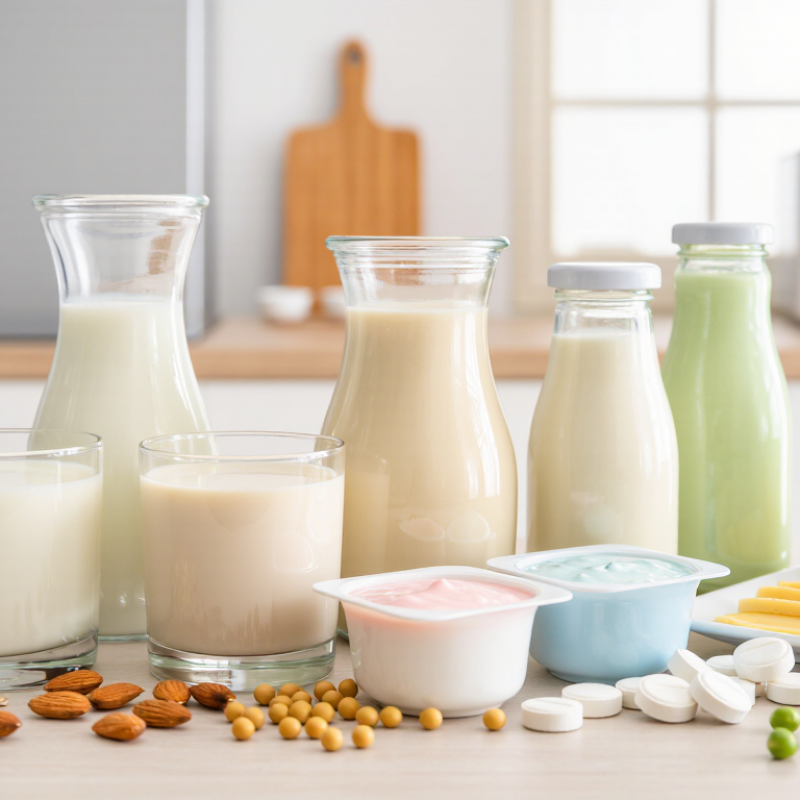
China’s Dairy-Free Market: Euromonitor 2024 Sales and Growth Data
China’s dairy-free market continued expanding in 2024, according to Euromonitor’s category tracking. Retail sales growth remained stronger in selected plant-based segments than in traditional dairy. Soy and oat drinks attracted steady attention, while coconut and nut-based products served more specialized tastes. Growth was not uniform across cities or income groups.
Euromonitor’s data separates retail value from volume, an important distinction for suppliers. Higher prices can increase sales value without showing equal consumer demand. In practice, buyers should examine both measures, plus repeat purchases and regional distribution. A supplier may report impressive revenue, yet its products may still have limited household penetration. That deserves caution.
China’s leading dairy-free suppliers usually compete through stable formulations, food-grade facilities, flexible packaging, and dependable delivery. They also need clear allergen controls and accurate nutrition information. My market experience suggests that texture often decides repeat purchase. A drink that separates in a chilled bottle loses trust quickly. Local suppliers can respond faster to flavor preferences and seasonal demand, but quality consistency remains a weakness for some smaller factories. Buyers should request recent test reports, production records, and pilot samples before ranking the top ten. The market is promising, though not effortless.
Ranking Criteria: Capacity, Certifications, Export Value, and MOQ Metrics
China Top 10 Dairy Free Alternatives Suppliers
A reliable ranking should measure more than product variety. Supplier capacity is the first practical filter. Review annual output, number of processing lines, warehouse space, and backup power. A factory producing 5,000 tons annually may serve large contracts, but capacity must match the buyer’s required delivery schedule.
Certifications provide stronger evidence of process control. Check current HACCP, ISO 22000, BRCGS, organic, and allergen-management documents. Verify certificate numbers, issuing bodies, product scope, and expiration dates. Do not treat every certificate as equal. On-site audits and recent batch records add useful evidence. They reveal cleaning routines, traceability, and testing discipline. Small details matter.
Export value can indicate market experience, but it is not a complete quality measure. Customs data, destination diversity, repeat shipments, and documented export volume deserve separate review. A high export value may reflect low-margin bulk sales. That can mislead buyers. MOQ should be compared with sample orders, private-label production, packaging options, and lead times. Some suppliers accept a low MOQ but charge heavily for testing or customized packaging. Others quote a larger MOQ while offering better unit economics. The final ranking should combine these metrics, not reward one impressive number. My own assessment would also record gaps, because incomplete data is common and deserves caution.
China Top 10 Dairy-Free Alternatives Suppliers
Ranking criteria are weighted according to their practical importance in supplier screening: production capacity, certifications, export value, and minimum order quantity. The weighting model is intended for transparent comparison when supplier-level public data is incomplete or not standardized.
Recommended scoring method: Capacity 30%, Certifications 25%, Export Value 25%, and MOQ Flexibility 20%. Lower MOQ receives a higher score.
China’s Top 10 Dairy-Free Suppliers by Product Category and Market Data
China’s top 10 dairy-free suppliers are best compared by product category, processing capacity, and market reach. The leading group includes oat, soy, coconut, almond, rice, pea, and blended beverage producers. Several suppliers also manufacture plant-based powders for coffee, bakery, nutrition, and foodservice applications. Market data from recent distributor surveys suggests that oat and soy drinks account for the largest share of domestic demand, while pea-based products are expanding from a smaller base. Exact rankings vary by sales channel and reporting method.
Large suppliers commonly offer aseptic cartons, chilled bottles, barista formulas, and bulk powder. Export-oriented factories often provide HACCP-based systems, traceability records, allergen controls, and third-party laboratory testing.
Buyers should examine protein content, sugar levels, shelf life, minimum order quantities, and filling-line flexibility. A supplier with modern equipment may still struggle with consistent texture across batches. That detail matters.
The strongest ten candidates usually fall into three market tiers: high-volume beverage manufacturers, specialized ingredient processors, and flexible OEM factories. Domestic retail favors convenient single-serve packs, while overseas buyers often request private-label formulas and multilingual compliance documents. Indicative 2024 market observations show premium dairy-free beverages growing faster than traditional soy products, especially in coffee and fitness channels. However, public supplier data remains uneven. Some rankings rely on shipment estimates, not audited revenue. Buyers should verify factory ownership, certifications, sample performance, and recent export records before signing contracts.
Supplier Profiles: Ingredients, Annual Output, Certifications, and Export Markets
China Top 10 Dairy Free Alternatives Suppliers
China’s leading dairy-free alternative suppliers usually specialize in soy, oat, rice, coconut, pea, or almond-based ingredients. Their product ranges include plant-based milk powders, beverage concentrates, protein blends, creamers, and bakery fillings.
A reliable supplier should explain raw material origins, allergen controls, extraction methods, and storage conditions. Some factories report annual output from 5,000 to over 50,000 metric tons, depending on product type and processing capacity.
Certification details deserve close attention.
Common documents include ISO 9001, HACCP, FSSC 22000, and applicable organic or non-GMO certificates. Export-ready suppliers may also support regulatory files for the European Union, North America, Southeast Asia, and the Middle East.
Check whether certificates cover the exact production site. This point is often missed. A trading office may hold documents that do not represent the manufacturing plant.
Supplier profiles should list minimum order quantities, production lead times, packaging options, and laboratory testing procedures. Many factories offer 20–25 kilogram bags, bulk tank delivery, or private formulation support.
Samples should be tested for taste, solubility, viscosity, microbiological limits, and shelf stability. Annual output sounds impressive, but it does not prove consistent quality.
I would also compare three recent batches, because one sample can look unusually good. Export experience matters when suppliers handle customs documents, temperature-sensitive cargo, and destination-specific labeling requirements.
Compliance Review: GB Standards, BRCGS, ISO 22000, and Allergen Controls
China Top 10 Dairy Free Alternatives Suppliers: Compliance Review
Evaluating dairy-free alternative suppliers in China requires more than comparing prices or product samples. Experienced buyers should verify the applicable GB standards for ingredients, production, labeling, and microbiological safety. Requirements may differ between powders, beverages, desserts, and nutrition products. Ask for current test reports, production licenses, batch records, and traceability evidence. A polished document is not proof of daily control.
BRCGS certification can indicate structured food safety management, but its site scope and certificate status must be checked carefully. ISO 22000 adds a recognized framework for hazard analysis, verification, and continual improvement. During a factory review, inspect cleaning schedules, metal detection records, storage temperatures, and employee hygiene practices. Small details matter. Missing signatures can reveal weak execution.
Allergen control deserves direct attention. Dairy-free production may still share equipment with milk, soy, nuts, gluten, or other regulated allergens. Suppliers should show validated cleaning procedures, line-sequencing rules, swab results, and clearly separated storage areas. Review their change-control process before approving a formula. One overlooked flavoring can change the risk profile. In practice, controls are rarely perfect, and audit findings should be treated as useful evidence rather than hidden defects. Remote assessments help, but an independent on-site audit remains more reliable.
China Top 10 Dairy-Free Alternatives Suppliers? – Compliance Review: GB Standards, BRCGS, ISO 22000, and Allergen Controls
Anonymous supplier screening matrix for dairy-free alternative ingredients and finished products. The ordering is a review sequence rather than a verified market ranking.
| Review Position |
Anonymous Supplier Profile |
Dairy-Free Category |
Typical Commercial Format |
Relevant China GB Standards and Controls | BRCGS Food Safety |
ISO 22000 |
Allergen-Control Points to Verify | Minimum Documentary Evidence Before Approval |
|---|---|---|---|---|---|---|---|---|
| 01 | Supplier Profile 01 | Oat-based alternatives | Powder, concentrate, beverage, or bar ingredient |
GB 2760 for permitted food additives; GB 7718 for prepackaged-food labeling; GB 28050 for nutrition labeling; GB 14881 for general hygiene practices. |
Certificate to verify | Certificate to verify | Confirm gluten or wheat cross-contact controls where relevant; segregate oat handling from milk, soy, and tree nuts; verify cleaning validation and label declarations. | Current certificate scope, process-flow diagram, allergen matrix, sanitation records, recent microbiological and chemical test reports, and product specification. |
| 02 | Supplier Profile 02 | Soy-based alternatives | Soy protein, tofu-style product, beverage, or powder |
GB 2760 additive compliance; GB 7718 ingredient and allergen labeling; GB 28050 nutrition information; GB 14881 hygienic production controls. |
Certificate to verify | Certificate to verify | Soy is a major allergen requiring controlled declaration; verify segregation from milk, egg, wheat, peanut, and tree nuts and review rework management. | Allergen-control plan, supplier-approval procedure, validated allergen-cleaning method, traceability test, finished-product allergen statement, and certificate scope. |
| 03 | Supplier Profile 03 | Coconut-based alternatives | Coconut milk, cream, powder, or dessert base |
GB 2760 for additives and processing aids where applicable; GB 7718 labeling; GB 28050 nutrition labeling; relevant GB 4789 microbiological testing methods. |
Certificate to verify | Certificate to verify | Verify controls for milk, soy, tree nuts, and sulfite-containing ingredients; assess raw-coconut supplier approval, foreign-material control, and environmental hygiene. | Raw-material specifications, pesticide or contaminant monitoring where applicable, microbiological trend data, allergen risk assessment, and recall procedure. |
| 04 | Supplier Profile 04 | Almond-based alternatives | Nut beverage, paste, flour, or protein ingredient |
GB 2760 additive requirements; GB 7718 labeling and ingredient declaration; GB 28050 nutrition labeling; GB 14881 hygienic manufacturing controls. |
Certificate to verify | Certificate to verify | Tree-nut status must be clearly declared; verify dedicated or validated-clean equipment, airborne and dust controls, peanut segregation, and changeover verification. | Tree-nut allergen declaration, cleaning validation, allergen swab results, batch traceability, foreign-material controls, and current third-party audit report. |
| 05 | Supplier Profile 05 | Pea-protein alternatives | Protein isolate, beverage base, powder, or extruded product |
GB 2760 permitted additives; GB 7718 labeling; GB 28050 nutrition claims and declaration; GB 14881 production hygiene. |
Certificate to verify | Certificate to verify | Review shared-line exposure to soy, milk, wheat, peanut, and tree nuts; confirm protein-allergen risk assessment, dust control, and validated sanitation. | HACCP or food-safety plan, allergen map, cleaning verification, incoming-material COAs, heavy-metal and microbiological results, and finished-product specification. |
| 06 | Supplier Profile 06 | Rice-based alternatives | Rice beverage, syrup, flour, powder, or snack base |
GB 2760 additive compliance; GB 7718 label compliance; GB 28050 nutrition labeling; applicable contaminant and microbiological controls under current GB requirements. |
Certificate to verify | Certificate to verify | Verify controls for milk, soy, wheat, and nut cross-contact; evaluate raw-rice supplier approval, mycotoxin or contaminant monitoring, and moisture control. | Raw-material COAs, contaminant-monitoring plan, allergen-cleaning records, shelf-life study, environmental monitoring results, and traceability documentation. |
| 07 | Supplier Profile 07 | Cashew-based alternatives | Cashew cream, paste, beverage, or dessert ingredient |
GB 2760 additive requirements; GB 7718 allergen and ingredient labeling; GB 28050 nutrition labeling; GB 14881 hygienic controls. |
Certificate to verify | Certificate to verify | Tree-nut allergen controls are critical; verify segregation from almond, peanut, milk, soy, and wheat, plus validated cleaning for high-fat nut residues. | Allergen risk assessment, validated cleaning protocol, allergen test results where used, raw-nut approval records, pest-control records, and audit certificate scope. |
| 08 | Supplier Profile 08 | Potato-based alternatives | Potato protein, starch blend, powder, or formulated beverage |
GB 2760 additives and formulation controls; GB 7718 labeling; GB 28050 nutrition declaration; GB 14881 hygienic manufacturing. |
Certificate to verify | Certificate to verify | Confirm shared-equipment controls for milk, soy, wheat, and nuts; verify ingredient identity, acrylamide-risk assessment where heat processing applies, and sanitation checks. | Ingredient identity and purity specification, process controls, allergen matrix, thermal-process validation, microbiological results, and corrective-action history. |
| 09 | Supplier Profile 09 | Hemp-seed alternatives | Hemp-seed beverage, protein powder, or oil-based ingredient |
GB 2760 permitted additives; GB 7718 ingredient and claim labeling; GB 28050 nutrition labeling; product-specific Chinese regulatory assessment for novel or restricted ingredients where applicable. |
Certificate to verify | Certificate to verify | Verify controls for milk, soy, sesame, peanut, and tree nuts; assess raw-material legality for the intended Chinese use and control of cross-contact during milling. | Regulatory eligibility review, raw-material origin records, contaminant and microbiological testing, allergen plan, product specification, and traceability evidence. |
| 10 | Supplier Profile 10 | Multi-source blended alternatives | Composite powder, ready-to-drink beverage, or formulated dessert |
GB 2760 formulation and additive compliance; GB 7718 complete ingredient and allergen labeling; GB 28050 nutrition labeling; GB 14881 hygienic manufacturing and process control. |
Certificate to verify | Certificate to verify | Map every allergen from all sub-ingredients; verify supplier-chain controls, formulation change management, rework segregation, and finished-product label accuracy. | Full bill of materials, supplier approval records, allergen decision tree, label review, change-control procedure, batch traceability exercise, and current audit evidence. |
Related Posts
-
What Are China Top 10 Dairy Free Alternatives Suppliers?
-
How to Make Healthy Food Choices in 2026 for Global Buyers?
-
10 Best Whole Food Nutrition Sources for a Healthier Lifestyle?
-
Top Healthy Snack Foods to Source from China?
-
Top 10 Healthy Snack Foods for Global Buyers to Consider
-
2026 How to Choose Natural Food Products for a Healthier Lifestyle?