


Careers

How to Source Plant Based Beverages in 2026?

Sourcing plant based beverages in 2026 requires more than finding a popular oat, almond, or soy formula. Buyers must connect market evidence with reliable supplier performance. According to the Good Food Institute’s 2024 State of the Industry report, U.S. plant-based retail sales reached approximately $8.1 billion in 2023. Plant-based milk remained the largest category, with about $2.9 billion in sales. These figures show demand, but they do not guarantee profit for every beverage concept.

The details matter.

A sourcing team should compare ingredient functionality, minimum order quantities, lead times, shelf life, and cold-chain requirements. Supplier audits should examine allergen controls, traceability records, water use, and certificate validity. Innova Market Insights’ 2025 consumer trend analysis also highlights stronger interest in nutrition, recognizable ingredients, and practical value. Therefore, suppliers should provide complete specifications, including protein levels, sugar content, stabilizer systems, and sensory performance after storage.

A promising sample can still fail commercially.

For example, an oat drink may pour smoothly during a factory trial but separate after six weeks on a supermarket shelf. Almond beverages may offer a familiar taste, yet face higher cost or water-related scrutiny in certain sourcing regions. These risks require pilot batches, accelerated shelf-life testing, and independent laboratory verification. Certifications can support trust, but they should not replace direct evidence. This guide explains how to evaluate suppliers, verify claims, control costs, and build a more resilient sourcing plan for plant based beverages in 2026. Some assumptions will need revision as prices, regulations, and consumer preferences continue changing.
How to Source Plant Based Beverages in 2026?

Define the Plant-Based Beverage Category and Sourcing Goals

When sourcing plant-based beverages in 2026, define the category before requesting quotations. The category includes drinks built mainly from plant ingredients, such as oats, soy, peas, nuts, seeds, rice, or coconut. It may cover ready-to-drink products, concentrates, powders, and barista-style formulations. However, “plant-based” does not automatically mean nutritionally complete, allergen-free, organic, or suitable for every diet. Set those boundaries in writing.

A useful specification identifies the plant base, extraction method, added water, sweeteners, oils, minerals, vitamins, stabilizers, and permitted processing aids. It should also state the target protein level, texture, flavor, shelf life, package size, and serving temperature.

Keep the commercial goal measurable. For example, require stable foaming after steaming, a clean flavor, and consistent viscosity across three production batches.

Small details matter.

Sourcing goals should balance quality, cost, supply continuity, and responsible procurement. Request origin records, allergen controls, certificates, recent batch data, and clear testing methods. Compare samples made under the same conditions, not only laboratory figures. A supplier may show excellent protein results but weak flavor performance.

That happens.

Harvest changes can also affect color and sediment. I would include a review point after the pilot run, because the first specification is rarely perfect. Leave room to revise it.

Assess Consumer Demand, Ingredients, and Product Formats

How to Source Plant Based Beverages in 2026?

Consumer demand is becoming more specific, not simply larger. Shoppers may want lower sugar, higher protein, and recognizable ingredients. Many also expect a smooth texture without excessive gums. Sourcing teams should compare regional preferences before selecting a single formula. A coffee-focused market may prefer oat or pea bases. Another market may favor nut, seed, or blended formulas. Taste trials matter more than survey optimism.

Ingredient quality requires practical verification. Request certificates of analysis, allergen controls, origin records, and recent microbiological results. Check how ingredients perform after heating, storage, and transport. Some proteins create sediment after several weeks. Some oils leave an unpleasant coating. Small bench tests can expose these problems early. They are not perfect. That is useful.

Product format should match the buying occasion. Chilled cartons suit frequent household use but require dependable temperature control. Shelf-stable beverages simplify wider distribution and reduce cold-chain pressure. Single-serve bottles can support commuting, fitness, or school routines. Concentrates and powders may reduce shipping weight, yet consumers may dislike extra preparation. Packaging claims also need careful review and clear substantiation. Product developers should test taste, pourability, separation, and package durability with real users. Forecasts can still miss. Build flexible supply agreements where possible.

Evaluate Suppliers, Certifications, Quality, and Supply Capacity

How to Source Plant Based Beverages in 2026?

Supplier evaluation should begin with evidence, not attractive samples. The Good Food Institute’s 2024 State of the Industry report valued U.S. plant-based retail sales at about $8.1 billion in 2023. That growth increases pressure on reliable supply. Request recent audit reports, allergen controls, certificates of analysis, and full ingredient traceability. Check whether certifications match your market, such as organic, non-GMO, halal, kosher, FSSC 22000, or BRCGS. A certificate can expire.

Quality testing must reflect the finished beverage. Review protein content, sedimentation, viscosity, flavor stability, microbiological results, pesticide residues, heavy metals, and shelf-life evidence. Ask for retained samples from different production dates. Test the drink after transport, not only inside the factory. The UNEP Food Waste Index Report 2024 estimates that 1.05 billion tonnes of food were wasted in 2022. Stable packaging and realistic expiry dates therefore matter commercially and environmentally.

Capacity claims need practical verification. Request monthly output, current utilization, minimum order quantities, lead times, filling-line specifications, and backup production options. Confirm access to key inputs, including oats, soy, peas, nuts, oils, and stabilizers. Visit the facility when possible. I have found that spreadsheets often look stronger than production floors. That is a useful warning. Also review recall procedures, complaint records, business continuity plans, and communication speed. A supplier with lower pricing may still create higher costs through delays, inconsistent texture, or rejected batches.

Compare Costs, Contracts, Logistics, and Sustainability Standards

How to Source Plant Based Beverages in 2026?

Sourcing plant-based beverages in 2026 requires more than comparing the lowest invoice price. Calculate ingredient costs, filling fees, packaging, freight, storage, testing, and expected waste. A carton that costs less may require longer transport or special handling. Numbers matter. Request a landed-cost model for each supplier, using the same volume and delivery location.

Contracts should define minimum order quantities, lead times, quality specifications, payment terms, and rejected-batch procedures. Include a clear price-adjustment formula for crops, energy, and packaging materials. Ask suppliers to disclose backup production sites. A contract without service-level targets can create expensive surprises. However, rigid volume commitments may leave buyers with excess stock when demand changes.

Logistics planning should match shelf life with transit time. Check loading temperatures, pallet patterns, port risks, and warehouse capacity before signing. Sustainability reviews need evidence, not attractive wording. Request traceability records, renewable-energy data, water-use measurements, packaging details, and independent certifications where relevant. Compare emissions per delivered litre, not only emissions at the factory. A low-carbon claim can still hide heavy transport impacts. No scorecard is perfect. Review it every quarter, and admit when a convenient supplier performs poorly on waste or transparency.

How to Source Plant Based Beverages in 2026? - Compare Costs, Contracts, Logistics, and Sustainability Standards
Indicative 2026 sourcing benchmark for ambient, ready-to-drink plant-based beverages. Costs are shown in USD and should be adjusted for origin, formulation, packaging format, order volume, duties, exchange rates, and Incoterms.
Base Beverage Indicative Bulk Cost
USD/L
Typical Commercial Terms Logistics Profile Quality and Supply Considerations Sustainability Standards to Request Indicative Environmental Benchmark
Oat $0.75–$1.35/L
Finished, ambient, private-label equivalent
MOQ: approximately 1–3 full truckloads per SKU
Contract: 6–12 months
Price review: quarterly or semi-annually
Recommended safety stock: 4–8 weeks
Ambient shelf life commonly 9–12 months
Efficient for palletized truck or container transport
Typical case pack: 6–12 units
Check viscosity, sedimentation, enzymatic sweetness, allergen controls, and heat stability. Oat supply can be affected by crop quality and mycotoxin-control requirements. ISO 14001 or equivalent environmental management; GHG Protocol product footprint; FSC or PEFC-certified paperboard where applicable; verified renewable-energy claims. Approx. 0.4–0.9 kg CO₂e/L for the beverage system, excluding retail refrigeration. Confirm boundary, allocation method, and packaging assumptions.
Soy $0.65–$1.20/L
Finished, ambient, private-label equivalent
MOQ: approximately 1–3 full truckloads per SKU
Contract: 6–12 months
Include protein-content and commodity-adjustment clauses
Recommended safety stock: 4–8 weeks
Ambient shelf life commonly 9–12 months
Good cube efficiency in aseptic cartons
Verify origin-specific import documentation and tariff treatment
Confirm protein level, beany-note control, sedimentation, pesticide limits, allergen segregation, and traceability to country of origin. Request deforestation-free sourcing evidence where relevant; ProTerra, RTRS, or equivalent responsible-soy documentation; ISO 14001; GHG Protocol accounting. Approx. 0.5–1.0 kg CO₂e/L, depending strongly on agricultural practices, land-use assumptions, packaging, and processing energy.
Almond $0.85–$1.60/L
Finished, ambient, private-label equivalent
MOQ: approximately 1–3 full truckloads per SKU
Contract: 6–12 months
Add crop-year and nut-cost pass-through provisions
Recommended safety stock: 6–10 weeks
Ambient shelf life commonly 9–12 months
Lower product density can increase freight cost per nutrient delivered
Protect from heat and prolonged storage
Require aflatoxin testing, allergen management, sensory specifications, water-use disclosures, and control of separation during storage. ISO 14001; farm-level water-risk assessment; SMETA or equivalent social-audit evidence; GHG Protocol product footprint; certified recycled or responsibly sourced packaging. Approx. 0.7–1.5 kg CO₂e/L. Water-footprint results vary significantly by growing region and irrigation method; request location-specific data.
Pea $0.90–$1.80/L
Finished, ambient, private-label equivalent
MOQ: approximately 1–3 full truckloads per SKU
Contract: 6–12 months
Include pea-protein indexation and formulation-change controls
Recommended safety stock: 6–10 weeks
Ambient shelf life commonly 9–12 months
Protein ingredients may be sourced separately from beverage filling
Longer lead times are possible for specialty protein systems
Check protein concentration, off-notes, grit, viscosity, emulsification, amino-acid claims, and allergen cross-contact controls. ISO 14001; supplier GHG inventory aligned with the GHG Protocol; non-GMO documentation where claimed; responsible-labor and traceability audits. Approx. 0.5–1.2 kg CO₂e/L, subject to protein concentration, agricultural inputs, processing energy, and packaging format.
Coconut $0.80–$1.50/L
Finished, ambient, private-label equivalent
MOQ: approximately 1–3 full truckloads per SKU
Contract: 6–12 months
Include origin, harvest, and foreign-exchange review clauses
Recommended safety stock: 8–12 weeks
Ambient shelf life commonly 9–12 months
Longer ocean lead times are common for tropical origins
Allow additional buffer for port congestion and monsoon-related disruption
Verify fat content, microbial stability, flavor consistency, origin traceability, and ethical labor controls in agricultural supply chains. SMETA or equivalent social-audit evidence; farm and processor traceability; ISO 14001; GHG Protocol reporting; packaging recyclability assessment. Approx. 0.8–1.6 kg CO₂e/L, with results influenced by farm practices, co-product allocation, processing location, and international freight.
Blended Formula $0.90–$1.90/L
Multi-base, fortified, or barista-style formula
MOQ: approximately 2–5 full truckloads per SKU
Contract: 12–24 months preferred
Use indexed raw-material pricing plus change-control procedures
Recommended safety stock: 8–12 weeks
Ambient shelf life commonly 9–12 months
More ingredients increase documentation and planning complexity
Use FEFO inventory control and lot-level traceability
Validate nutrition, fortification uniformity, emulsion stability, allergen matrix, sensory shelf life, and regulatory compliance in each target market. ISO 14001; ISO 22000 or FSSC 22000 food-safety system; GHG Protocol product footprint; packaging recycled-content and recyclability evidence; supplier code of conduct. Approx. 0.6–1.4 kg CO₂e/L, depending on the share of higher-protein ingredients, fortification, processing intensity, and packaging.
Procurement checklist: Compare suppliers on delivered cost rather than ex-works price; define Incoterms, payment terms, lead time, minimum order quantity, service-level targets, product specifications, audit rights, force-majeure provisions, forecast flexibility, and chargebacks for non-conforming goods. Sustainability figures are indicative ranges, not supplier-specific verified claims. Require a product carbon footprint using ISO 14067 or an equivalent method, with clearly stated system boundaries and third-party verification where claims will appear on-pack.

Test Products, Manage Risks, and Build a Reliable Supply Plan

How to Source Plant-Based Beverages in 2026?

In 2026, sourcing plant-based beverages will require disciplined testing, not attractive promises. The Good Food Institute and Plant Based Foods Association reported $2.9 billion in U.S. plant-based milk retail sales during 2023. The category represented 13% of total milk retail dollars. Demand exists, but shelf space does not guarantee repeat purchases. McKinsey’s 2024 Future of Wellness report found that 82% of U.S. consumers consider wellness a top priority. Still, taste, texture, price, and clear nutrition information decide whether interest becomes regular consumption.

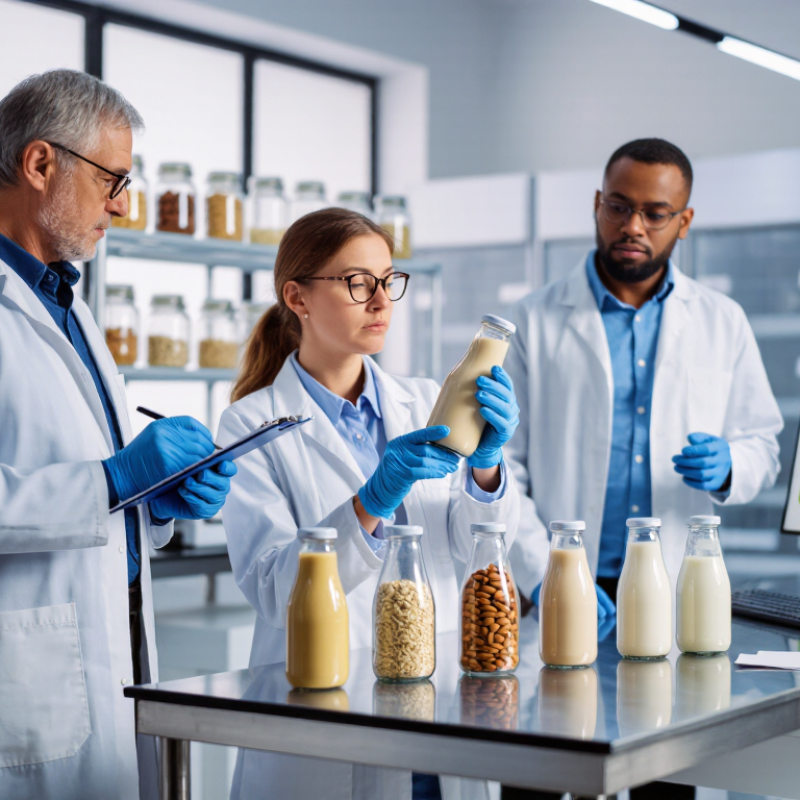
Start with a controlled product pilot. Request samples from at least three qualified suppliers. Test flavor after refrigeration, shaking, and seven days of storage. Check sediment, separation, viscosity, packaging strength, and actual serving cost. Keep a written scorecard. It exposes weak assumptions early.

I would not trust a single successful tasting session. Consumers may reject a beverage after one warm commute or an awkward pour. Confirm ingredient specifications, allergen controls, certificates, shelf-life data, and applicable labeling requirements. Review each supplier’s production capacity and lead times. Ask for documented contingency plans.

Build the supply plan around two approved sources, where practical. Set minimum stock levels for key ingredients and packaging. Include backup transport routes. Review crop exposure for oats, almonds, soy, and other base ingredients. Prices can change faster than forecasts. The plan should also define quality thresholds, rejection procedures, and communication timing. Imperfect data is unavoidable. Ignoring it is the larger risk.