Top 10 Types of Bovine Collagen Powder for Global Buyers
The global collagen market is expanding, but buyers need more than a large growth forecast. Grand View Research estimates the market could reach about USD 19 billion by 2030, with bovine collagen remaining a significant source. MarketsandMarkets reports also project strong growth, although its figures differ because product definitions and regions vary. That difference matters.
This guide examines the Top 10 Types of Bovine Collagen Powder for Global Buyers. It compares Type I and Type III profiles, hydrolyzed peptides, molecular weight, solubility, odor, color, and application suitability. A clean white powder may perform well in a beverage, yet fail in a capsule or protein blend. Small technical details matter.
Bovine collagen is commonly sourced from cattle hides and bones, supporting practical use of livestock by-products. However, sourcing claims require evidence. Buyers should request certificates of analysis, traceability records, microbiological results, heavy-metal testing, and documentation for halal, kosher, or other market requirements. Supplier experience also deserves close review.
Collagen Powder Bovine is not one uniform ingredient. Processing conditions can change dispersibility, taste, peptide distribution, and finished-product performance. This article uses published market research and standard quality considerations to create a clearer purchasing framework. It is not perfect. Reported market values vary, and supplier terminology can be inconsistent. Careful verification remains essential before placing a global order.
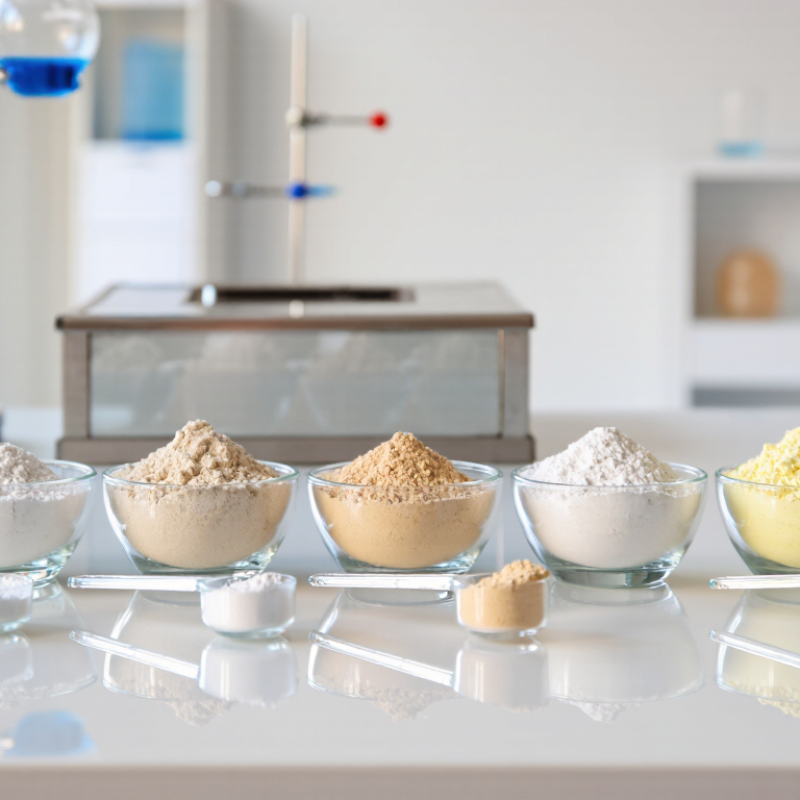
What Bovine Collagen Powder Is and How It Is Produced
Bovine collagen powder is a purified protein made mainly from cattle hides, bones, and connective tissues. It is rich in type I collagen, although the final profile depends on the raw material and processing method. FAOSTAT’s 2023 livestock tables recorded more than 1.5 billion cattle worldwide, supporting a broad by-product supply chain. However, supply volume does not guarantee consistent quality.
Production begins with inspection, trimming, washing, and alkaline or acidic pretreatment. Bone materials usually require demineralization to remove calcium salts. The treated collagen is then extracted with controlled heat, enzymes, or both. Hydrolysis breaks large collagen molecules into smaller peptides. This changes solubility, taste, and absorption characteristics.
Drying matters greatly.
Spray drying can produce a fine, free-flowing powder. Freeze drying may better protect heat-sensitive qualities, but it usually costs more. Manufacturers then test moisture, protein content, molecular weight, microbial limits, heavy metals, and banned residues. ISO 22000:2018 provides a recognized framework for food-safety management, while Codex guidance supports hygienic processing controls. A 2024 global market assessment by Grand View Research identified hydrolyzed collagen as a major product segment, reflecting demand for quick-dissolving powders. Still, market estimates differ by method and product definition. Buyers should request certificates of analysis, origin records, allergen statements, and batch traceability. “Grass-fed” claims also need careful verification.
The Top Ten Types of Bovine Collagen Powder
Top 10 Types of Bovine Collagen Powder for Global Buyers
The Top Ten Types of Bovine Collagen Powder
Global buyers usually classify bovine collagen powder by structure, processing, and origin. Four key categories are Type I peptides, Type III peptides, Type I/III blends, and native Type I. Six others describe processing or source: gelatin, collagen tripeptides, low-molecular-weight peptides, higher-molecular-weight peptides, hide-derived collagen, and bone-derived collagen.
Hydrolyzed Type I powder is common in beverages and nutrition mixes. Type III is often selected for connective-tissue formulations. Gelatin behaves differently because heat and water create a firm texture. Low-molecular-weight peptides usually dissolve quickly in cold water. Bone-derived material may show different mineral-control requirements. Hide-derived material often offers a cleaner powder profile, but supplier specifications still matter.
Grand View Research estimated the global collagen market at USD 9.1 billion in 2022. MarketsandMarkets projected continued growth through 2028, supported by food, nutrition, and healthcare applications. These reports cover collagen broadly, not bovine powder alone. A neat ten-part list can mislead. Some suppliers use overlapping labels. Product testing remains more reliable than marketing language.
Tips: Request a current certificate of analysis, amino-acid profile, hydroxyproline result, peptide molecular-weight distribution, microbiological limits, heavy-metal data, and traceability records. Check solubility at the intended serving temperature. Confirm halal, kosher, or regional documentation when required. “Type I” alone is not enough.
How Bovine Collagen Powders Differ by Source and Processing
Top 10 Types of Bovine Collagen Powder for Global Buyers
How Bovine Collagen Powders Differ by Source and Processing
Bovine collagen powders usually come from hides, bones, split hides, or connective tissues. Hide-derived collagen often offers a cleaner appearance and consistent Type I content. Bone-derived material may contain more mineral traces before demineralization. Tendon-based powder can differ in amino acid balance and solubility. Source affects color, odor, ash, and protein concentration.
Processing creates another ten-category distinction. Acid-treated and alkali-treated collagen use different preparation conditions. Gelatin is heat-denatured collagen, while collagen peptides are enzymatically hydrolyzed into smaller chains. Non-hydrolyzed collagen dissolves more slowly. Hydrolyzed powder usually disperses faster in cool water. Filtration can reduce visible particles, and spray drying controls texture and moisture. Particle size still matters.
Reliable buyers should request origin records, protein testing, moisture data, heavy metal screening, and microbiological results. A clear certificate should match the actual production lot. “Pure collagen” alone is not enough. Processing may improve solubility, but it can also change taste and functional behavior. No source is automatically superior. In practice, some specifications remain incomplete, especially for mixed-source powders. That deserves careful review. A useful sample test checks a 20-gram portion in room-temperature water, then records clumping, odor, sediment, and dissolution time. Small differences become obvious.
Key Quality, Safety, and Certification Factors for Global Buyers
Top 10 Types of Bovine Collagen Powder for Global Buyers
Bovine collagen powders differ by collagen type, peptide size, processing method, and intended use. Type I is common in skin and beauty formulas, while Type III may support products focused on connective tissues. Hydrolyzed peptides dissolve more easily in cold water. However, product names can hide important processing differences. Buyers should request the source country, tissue origin, extraction method, and full specification before comparing prices.
Safety evidence must follow the specific production lot. Ask for a current certificate of analysis covering microbiology, heavy metals, moisture, and prohibited residues. BSE and TSE statements are also important for bovine materials. Check whether the testing laboratory is independent and properly qualified. A certificate can look convincing, yet it may cover another facility or an older production date. I would not treat a glossy specification sheet as proof.
Tips: Confirm traceability from livestock source to sealed bag. Review GMP, HACCP, ISO 22000, halal, or kosher documents when required by the destination market. Inspect packaging for intact seals, batch codes, and clear storage instructions. Keep samples for verification after arrival. No audit is perfect. Even experienced buyers should recheck changing regulations, because one overlooked document can delay customs clearance or weaken customer trust.