



Careers
7 Tips for Buying Neutral Silicon Fertilizer?
Choosing Neutral Silicon Fertilizer can feel simple until product labels make different promises. One bag highlights neutral pH; another lists total silicon but says little about how much plants can access. The difference matters. Before comparing prices, buyers should check the product’s composition, solubility, application guidance, and suitability for their crop and soil. A low price per bag may not mean good value per usable amount of silicon.
Silicon researcher Dr. Larry Datnoff’s work provides a useful lens for evaluating these claims. A concise editorial paraphrase of that research—not a verbatim quotation—is: “Choose a silicon source for crop fit and verified availability, not branding alone.” That principle leads to practical questions: Is the stated silicon content supported by a recent analysis? Does the supplier provide clear handling and application instructions? Are product claims backed by reliable documentation? Labels can mislead. Details matter.
The seven tips ahead will help buyers examine these points without treating “neutral” as a guarantee of performance. They also encourage a closer look at pH information, source material, product consistency, and supplier support. Ask for evidence. Compare products on the same basis, and keep records of application rates and field results. Real soils vary, and no fertilizer works identically everywhere. That is worth remembering, even when a product page sounds certain.
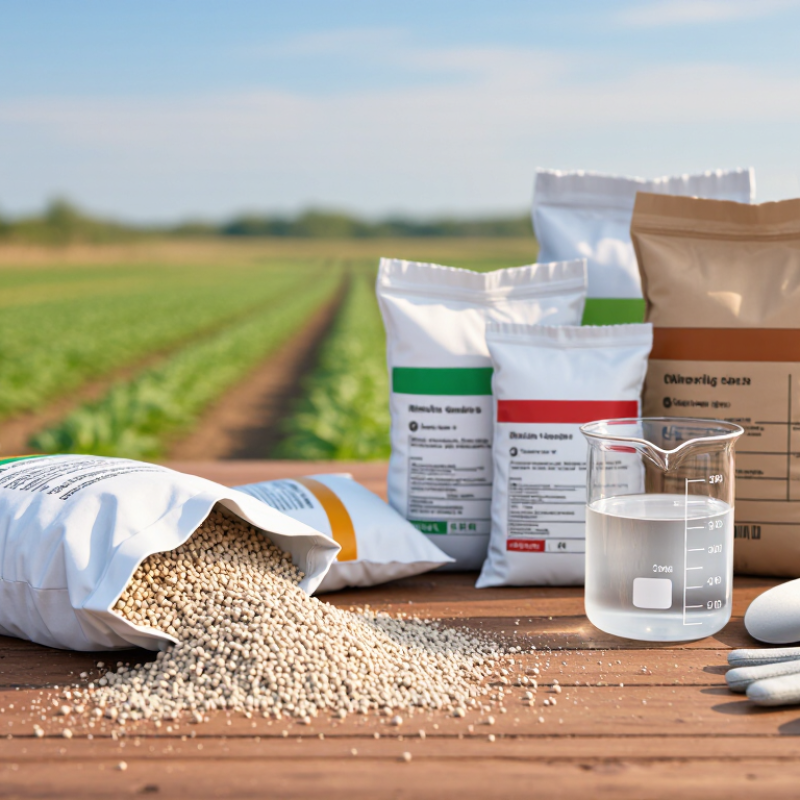
What Neutral Silicon Fertilizer Is and How It Works
Neutral silicon fertilizer is a silicon source formulated to have a near-neutral pH, unlike strongly alkaline silicate products. “Neutral” describes the product’s acid–base character; it does not guarantee that every form of silicon is equally available to plants. Check the label for the silicon source, concentration, and application directions. That distinction matters.
Plants absorb available silicon through their roots and move it into tissues, where it can accumulate in outer cell layers. This may help leaves and stems stay more upright and better tolerate certain stresses, such as drying soil. Silicon is not a substitute for balanced nutrition or suitable irrigation. Not a cure-all.
The result depends on crop type, soil conditions, and the product’s formulation. A soil test and a small, measured application can help guide decisions before treating a whole field or garden bed. For example, note the rate used and compare plant growth over time with an untreated area. I still find the term “neutral” easy to overread: it says something about pH, not a promise of stronger yields.
How to Confirm Your Soil and Crops Need Silicon
7 Tips for Buying Neutral Silicon Fertilizer?
How to Confirm Your Soil and Crops Need Silicon
Before buying, check whether silicon is actually limiting. Ask an accredited soil laboratory about plant-available silicon, not just total soil silicon. The two measures are different: much of the silicon in soil minerals may not be available to roots. Haynes’s 2014 review in Plant and Soil notes that available silicon varies widely with soil type, weathering, and management. There is no single threshold that fits every crop and region. Use local, crop-specific test guidance where available.
Look for crop evidence, too. Rice, sugarcane, and some other grasses can accumulate substantial silicon. Ma and colleagues’ 2001 review in Soil Science and Plant Nutrition reports that rice straw may contain roughly 5–10% silicon by dry weight. That figure describes uptake, not proof of deficiency. Ask a qualified lab to test plant tissue and compare results with local reference ranges. Check field history for repeated straw removal, low-silicon irrigation water, or symptoms such as weak stems and lodging. Symptoms alone can mislead.
Compare test results with a small, untreated field strip. Keep the crop, variety, and other inputs consistent, then record lodging, disease pressure, and yield. Results may vary with weather. That is worth remembering. If soil and tissue tests show adequate silicon, an added product may bring little benefit; a second test or local agronomist’s advice can help resolve uncertain results.
How to Check Product Form, Silicon Content, and pH
7 Tips for Buying Neutral Silicon Fertilizer?
How to Check Product Form, Silicon Content, and pH
“Neutral” does not describe every silicon fertilizer equally. Check whether the product is a liquid, soluble powder, or granular silicate, and whether its label lists water-soluble silicon or only total silicon. These are not interchangeable measures. If the label reports silicon dioxide (SiO₂), elemental silicon is about 46.7% of that weight, so compare products on the same basis. Ma and Takahashi’s research synthesis reports plant-tissue silicon levels ranging roughly from 0.1% to over 10% of dry weight, depending on crop and conditions. That wide range is a reminder: crop needs differ.
Check the pH measurement method, too. Ask whether it applies to the concentrate or a stated dilution; pH can shift after mixing. A near-neutral reading alone does not guarantee compatibility with other inputs. Follow the label’s dilution instructions, then test a small sample before preparing a full tank. Check the label. USDA NRCS guidance notes that many plants grow well in soil around pH 6–7, but that is soil pH—not a required pH for fertilizer. It is easy to confuse the two. I would also compare the guaranteed analysis with a recent product test or technical sheet, especially when the label gives total silicon without explaining its available form.
7 Tips for Buying Neutral Silicon Fertilizer: Check Form, Silicon Content, and pH
How to read the chart: These are reference buffer values for checking a calibrated pH meter—not fertilizer specifications. At 25°C, pH 7 is neutral. Ask the supplier for the product’s pH test method and dilution ratio before comparing results.
Seven checks before you buy
- Confirm the product form: identify whether it is a liquid, soluble powder, granule, or another form.
- Check the label basis: distinguish elemental silicon (Si) from silicon dioxide (SiO₂); they are not the same percentage.
- Ask what the silicon figure represents: total silicon and plant-available silicon are different measurements.
- Verify the pH method: request the tested concentration, water-to-product ratio, and temperature.
- Look for solubility and compatibility details: follow the label’s mixing instructions and check for restrictions.
- Match the application to your crop and soil: use locally appropriate agronomic guidance rather than assuming every crop needs silicon.
- Review documentation: check the guaranteed analysis, directions, safety information, and batch or quality documentation.
How to Compare Purity, Solubility, and Quality Standards
Neutral silicon fertilizer should be compared by usable silicon, not just the largest number on the label. Check total silicon and water-soluble silicon separately, and ask which laboratory method measured each. A high total SiO₂ result may still mean little silicon dissolves in irrigation water. IFA’s Fertilizer Outlook 2024–2028 reported global nutrient consumption of about 192.5 million tonnes in 2023/24. That market figure is not a silicon quality benchmark; it does show why clear, lot-specific test results matter.
Tips: Request a recent certificate of analysis for the actual production lot. Compare soluble silicon, moisture, particle size, and pH using the same test methods. Ask for contaminant results and the testing laboratory’s name. For a granular product, inspect a sample for uniform particles and excess dust. For a soluble product, stir a measured amount into clean water and note sediment after a fixed time. This simple check is useful, but it cannot replace laboratory analysis.
Check whether the stated solubility matches your water and application equipment; hard water can change mixing behavior. Be cautious when a seller gives only “purity” without defining the measurement basis. No single figure tells the whole story. A clear specification, repeatable testing, and a small compatibility trial are stronger buying signals than a broad “high quality” claim.
How to Match Application Rates and Instructions to Your Needs
A neutral silicon fertilizer can differ greatly in concentration, solubility, and application method. Check the product label for available silicon, whether rates refer to product weight or active ingredient, and which crops were tested. “Neutral” does not automatically mean suitable for every soil. A soil test can reveal pH and existing nutrient conditions before you choose a rate.
Match the instructions to your crop and delivery method. A foliar spray and a soil application may require very different amounts and timing. Follow the label’s crop-specific rate, dilution, and interval; do not transfer a rate from another formulation. Measure the treated area carefully. For a small garden bed, mark the edges and calculate its area before mixing. Then calibrate your sprayer or spreader with clean water or a measured test run. Small errors add up.
Use local soil or tissue-test results to guide adjustments, and keep notes on the date, rate, weather, and crop response. Avoid applying more because growth looks slow; silicon is not a substitute for correcting water or nutrient problems. I once overlooked the difference between product rate and active ingredient. It is an easy detail to miss, and worth checking twice. After application, watch for leaf scorch, uneven coverage, or changes in growth, and consult a qualified agricultural adviser if symptoms appear.


