How to Choose the Right Ball End Mill for Your Project?
Choosing the right Ball End Mill can significantly influence the success of your machining project. Expert John Smith once said, "The right tool makes all the difference." This advice emphasizes the importance of carefully selecting the right Ball End Mill for various applications.
When evaluating options, consider the project requirements. Different materials and designs demand specific milling tools. A Ball End Mill is essential for complex shapes, allowing for smoother contours and better surface finishes. Regular users often overlook the cutter's diameter, which impacts precision and detail.
A common mistake is choosing a Ball End Mill based solely on price. Quality should weigh heavily in your decision. Be mindful of the coatings as well; they enhance performance and longevity. Reflecting on previous projects reveals the learning curve involved in tool selection. Each job teaches valuable lessons for future endeavors, shaping a more informed approach.
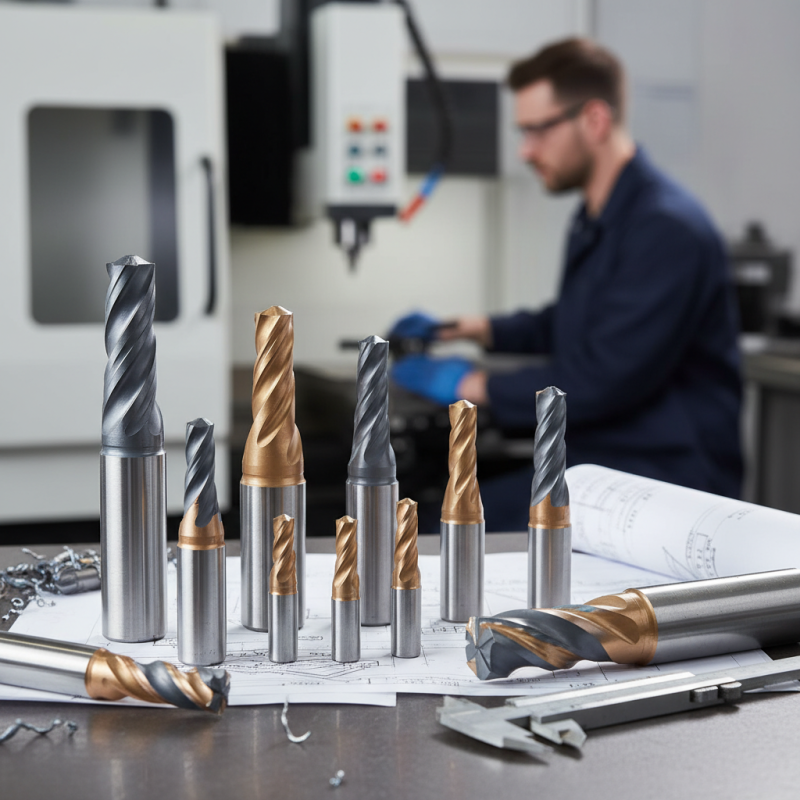
Understanding the Functionality of Ball End Mills in Machining
Ball end mills are essential tools in machining. Their unique shape allows for complex contours and precise CNC machining. These mills can produce smooth surfaces in metals, plastics, and composites, making them vital in the aerospace and automotive industries. A study by the Manufacturing Technology Association highlights that nearly 70% of machining operations utilize ball end mills, demonstrating their relevance.
When selecting a ball end mill, consider the size, material, and coating. The diameter of the ball affects the depth of cuts. Larger diameters create wider grooves, while smaller sizes work well for detailed features. A report from the Precision Tooling Institute indicates that using the appropriate size can improve efficiency by up to 30%.
Tips: Always match the coating to the material being machined. For harder materials, consider a coated end mill to reduce wear. Ensure your machine's spindle is compatible with your chosen mill. Using a mismatch can lead to poor results and tool damage, impacting production timelines.
Choosing the correct ball end mill involves assessing project requirements. Errors can occur if the wrong size or material is selected. Regularly review your tooling choices to optimize performance and results. This strategy highlights the importance of ongoing learning in machining processes.
Key Considerations for Selecting the Right Size of Ball End Mill
Choosing the correct size for a ball end mill is crucial for your machining project. A larger diameter tool can remove material quickly but may not fit into tight spaces. Conversely, a smaller diameter tool is great for intricate details but will require more passes to achieve depth. Consider the features of the part you are machining. Too large a tool might overlook subtle contours, while a too-small tool could underperform on larger surfaces.
The material of your workpiece also influences size selection. Softer materials allow for larger tooling, whereas harder materials may benefit from smaller, more precise tools. Each project has unique requirements, so understanding your material is essential. Examine your design closely. It’s common to overlook details that could impact your choice. Ensure that your ball end mill aligns with the intended geometry. If in doubt, err on the side of caution and choose a smaller tool to refine details without sacrificing quality.
Material Compatibility: Choosing the Best Ball End Mill for Your Project
When selecting a ball end mill, material compatibility is crucial. Different materials require specific tools to achieve optimal performance. For example, high-speed steel mills work well for softer materials. In contrast, carbide mills are better for harder materials like titanium or stainless steel. According to a recent industry report, 65% of machining failures are linked to improper tool selection.
Understanding the type of material is essential for success. Aluminum requires a different cutting tool than hardened steel. Using the wrong mill can lead to excessive wear or poor surface finish. Data shows that improper tool choice can reduce productivity by up to 30%. This is a significant loss in competitive manufacturing environments.
Moreover, surface treatments and coatings on mills add another layer of complexity. Coated mills provide enhanced performance in specific applications. However, miscalculating the coating type can hinder results. It's often useful to consult material specifications. This can clarify the best tools for achieving desired outcomes. Industry experts often emphasize testing different options before finalizing the choice. It’s a process of trial and error.
Exploring Different Coatings for Enhanced Ball End Mill Performance
When selecting a ball end mill, coatings play a crucial role in performance. Coatings enhance tool life, reduce friction, and improve surface finishes. Reports indicate that coated end mills can increase tool life by 30% to 50%. This statistic alone highlights the importance of choosing an appropriate coating for specific materials.
Different coatings serve various purposes. For example, titanium nitride (TiN) is popular for its hardness and wear resistance. It can withstand high temperatures and is effective for aluminum and copper materials. On the other hand, coatings like titanium carbonitride (TiCN) offer improved toughness and allow for better chip removal. About 20% of users reported enhanced machining speeds with TiCN-coated tools.
Not all coatings are perfect for every application. Some may wear off faster than expected or react poorly to certain materials. Conducting careful material tests can help avoid these pitfalls. In many instances, a wrong choice leads to increased production costs. Understanding the environment and materials is vital. This knowledge will guide you toward selecting the right coating for your ball end mill, ultimately maximizing efficiency and performance in your projects.
Assessing Your Project's Complexity and Its Impact on Mill Selection
When assessing your project's complexity, start by identifying its specific needs. Will you be machining intricate shapes or simple profiles? The answer will guide your selection of a ball end mill. For intricate designs, choose a tool with a smaller radius. This can help achieve detail without sacrificing accuracy. Larger projects might benefit from a tool with a broader radius to enhance efficiency.
Consider the material you are working with. Softer materials can be machined quickly, so a basic mill may suffice. However, harder materials present a challenge. A more robust tool is necessary to maintain longevity. You might need to test different tools to find the perfect match. Make adjustments based on your observations during machining. If you find that the finish is rough, you may need to rethink your initial choice.
Don’t underestimate the impact of the tool's specifications. Diameter, flute count, and coating all influence performance. A miscalculation here could lead to unsatisfactory results. Engaging in this evaluation may seem tedious, but it’s crucial for success. Remember, trial and error is part of the learning process.
How to Choose the Right Ball End Mill for Your Project?
| Project Complexity | Recommended Ball End Mill Size | Material Type | Recommended Cutting Speed (SFM) | Suggested Feed Rate (IPM) |
| Simple | 1/8 inch | Aluminum | 120 | 12 |
| Moderate | 1/4 inch | Steel | 80 | 10 |
| Complex | 3/8 inch | Titanium | 60 | 8 |
| Very Complex | 1/2 inch | Carbon Steel | 50 | 6 |