



Careers
2026 Best Jelly Tart Manufacturers for Global Buyers
Jelly Tart is moving from a niche bakery item toward a more visible opportunity in international foodservice and retail. The global bakery products market continues to expand, according to Grand View Research’s 2024 market analysis, while Innova Market Insights identifies indulgence, fruit-forward flavors, and premium visual presentation as important consumer trends. These signals are encouraging. They are not proof of unlimited demand.
This guide examines the 2026 Best Jelly Tart Manufacturers for Global Buyers through practical purchasing criteria. Product consistency matters. So do filling stability, crust texture, ingredient traceability, packaging strength, and export experience. A tart may look perfect in a factory photograph, yet arrive with cracked shells after a long ocean shipment. That detail can decide a contract. Buyers should request shelf-life evidence, allergen documentation, temperature guidance, and sample approvals before ordering.
Pastry chef Cédric Grolet has often emphasized, “The fruit is the star.” That principle suits Jelly Tart production, where fruit flavor, color, and clean slicing influence repeat purchases. However, appearance alone is insufficient. Sugar balance, gel firmness, and moisture migration require technical control. Available market reports usually classify these products within broader bakery or dessert categories, so precise Jelly Tart figures remain limited. That is an important weakness in the data.
The manufacturers selected here are therefore assessed with a careful lens: documented capabilities, quality systems, customization, minimum order quantities, logistics, and buyer communication. Some suppliers may appear highly competitive but provide limited evidence. That deserves scrutiny. Global buyers need attractive products, reliable paperwork, and realistic delivery performance.
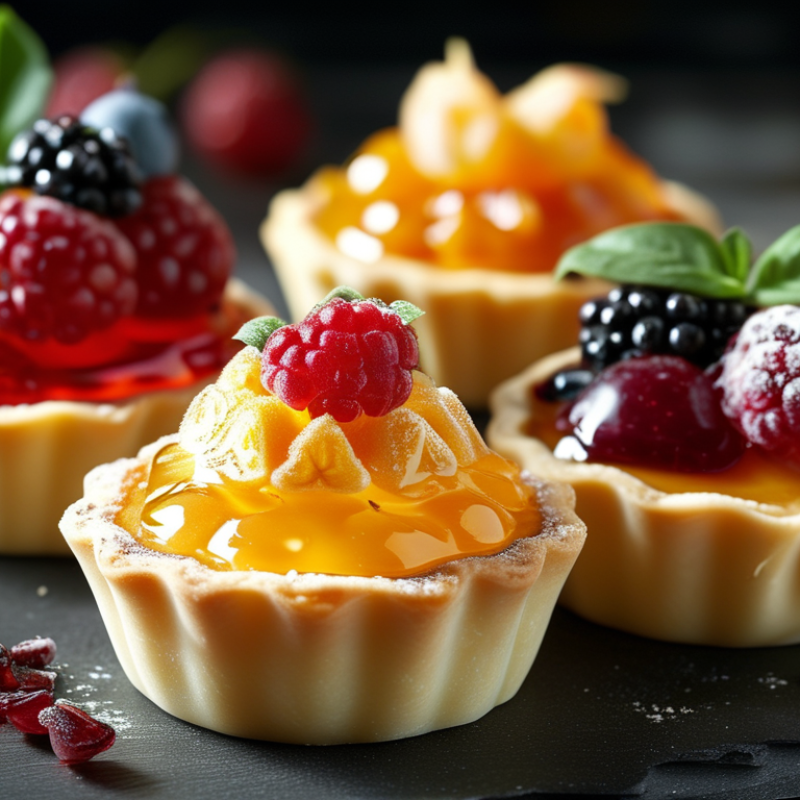
What Defines a Jelly Tart Manufacturer in 2026
2026 Best Jelly Tart Manufacturers for Global Buyers
What Defines a Jelly Tart Manufacturer in 2026
A capable jelly tart manufacturer controls more than taste and appearance. It manages pectin strength, fruit acidity, water activity, baking loss, and filling stability. Small changes matter. A shiny filling can crack after freezing or become sticky during ocean transport.
Grand View Research values the global confectionery market at over USD 250 billion in recent reporting, with steady growth expected through 2030. This growth raises buyer expectations for scalable production and dependable quality. A serious manufacturer should provide batch records, ingredient specifications, allergen controls, and traceability from fruit supplier to finished carton. HACCP systems and ISO 22000-based food safety practices offer stronger evidence than attractive catalog photographs.
Packaging also defines capability in 2026. The Sustainable Packaging Coalition reports continuing pressure to reduce unnecessary packaging and improve recyclability. Jelly tarts therefore need moisture barriers, crush protection, and practical material choices. These goals can conflict. Better protection may increase packaging weight. Buyers should request transport tests, shelf-life data, and temperature-abuse results before approving a shipment.
Experience remains visible in the details. Technicians should explain how recipes change across climates, ovens, and delivery routes. Samples should arrive with production dates and storage instructions. Some manufacturers still provide vague shelf-life claims. That deserves scrutiny. A reliable partner welcomes independent testing, though even a strong factory can miss a seasonal fruit variation.
Key Criteria for Evaluating Global Jelly Tart Suppliers
2026 Best Jelly Tart Manufacturers for Global Buyers
When evaluating jelly tart suppliers, begin with product consistency, not attractive catalog photos. Request recent samples from different production lots. Check the crust after shipping, the jelly’s firmness, and the filling’s flavor balance. A reliable manufacturer should explain ingredient sources, allergen controls, shelf life, and storage conditions clearly. Traceability records matter when a shipment contains hundreds of cartons. Ask for batch codes and production dates.
Production capacity must match your actual purchasing plan. A factory may promise high output, yet struggle during seasonal demand. Review lead times, minimum order quantities, packaging options, and export documentation. Confirm whether the supplier can protect fragile tarts in humid or warm routes. Independent audits and verifiable food-safety certificates add confidence. Still, paperwork alone is not enough. I have seen strong documents hide weak communication. That possibility deserves attention.
Tips: Send a detailed product brief before requesting quotations. Include target weight, tart size, packaging style, destination, and expected annual volume. Compare samples under normal storage conditions. Keep a written record of every specification. Ask difficult questions early. If answers remain vague, pause before signing a supply agreement. Also review payment terms and complaint procedures. A small trial order can reveal more than a polished presentation.
Leading Jelly Tart Manufacturers by Region and Specialty
2026 Best Jelly Tart Manufacturers for Global Buyers
Leading Jelly Tart Manufacturers by Region and Specialty
European jelly tart manufacturers often focus on refined pastry, clear fruit layers, and strict allergen control. Many offer reduced-sugar recipes, organic ingredients, and recyclable packaging. Buyers should request recent laboratory reports, shelf-life studies, and production samples before placing large orders. Elegant appearance matters, but a tart that cracks during transport is not a reliable product.
Asia-Pacific manufacturers frequently excel in delicate textures, tropical flavors, and compact packaging for export. Their specialties may include mango, yuzu, lychee, coconut, and plant-based fillings. Some factories provide flexible minimum order quantities, which helps buyers test new markets. However, flavor translation can be difficult. A recipe popular in one country may taste too sweet elsewhere.
North American producers often emphasize convenience, frozen distribution, and generous fruit pieces. Latin American facilities may bring strong citrus profiles and regional fruit expertise. Manufacturers in the Middle East and Africa can offer halal-compliant production, date-based fillings, and heat-conscious packaging. Regional capability is useful, but it should never replace verification. Inspect ingredient declarations, facility hygiene records, temperature controls, and delivery performance. Even experienced buyers can overlook carton strength or seasonal fruit changes. A practical supplier comparison should include texture after thawing, filling stability, lead time, customization costs, and complaint response speed. Some factories appear excellent during sampling, yet perform less consistently under full production pressure.
2026 Best Jelly Tart Manufacturers for Global Buyers
Regional specialty and sourcing indicators for jelly tart manufacturing, based on fruit-input availability, bakery-processing maturity, and export readiness.
The index uses a 0–100 comparative scale rather than company-level data. Higher values indicate stronger regional suitability for the specified jelly tart specialty, considering ingredient availability, processing infrastructure, and international supply capability.
Production Standards, Customization, and Export Capabilities
For global buyers, a jelly tart manufacturer must prove more than attractive samples. Production standards begin with controlled recipes, measured cooking temperatures, and documented ingredient lots. A reliable facility separates raw materials from finished goods. It also records allergen controls, sanitation checks, and metal detection results. Texture deserves practical testing. A tart should hold its shape, release cleanly, and remain pleasant after transport. Buyers can request batch samples after seven, fourteen, and thirty days. Small details matter. A slight syrup shift can change the eating experience.
Customization should cover filling texture, tart size, sweetness, color, packaging, and labeling files. Experienced suppliers convert a product brief into trial batches with clear approval points. They should explain which changes affect cost, shelf life, or production speed. Color stability needs testing under heat and light, not guesswork. Packaging trials should include vibration, stacking, and humidity exposure. I would ask for a written specification sheet, retained samples, and a change-control process. No factory is perfect. An overlooked seal defect can still appear during scale-up.
Export capability is visible in more than shipping experience. Suppliers should prepare accurate commercial invoices, packing lists, certificates, and product documents required by the destination market. Cartons need readable lot codes and moisture-resistant protection. Temperature-sensitive routes may require insulated handling or seasonal planning. Confirm pallet dimensions, loading photos, lead times, and communication during delays. Independent audits and traceable records add confidence, but buyers should verify every claim. Some production details remain uncertain until real shipments reveal them.
2026 Best Jelly Tart Manufacturers for Global Buyers - Production Standards, Customization, and Export Capabilities
Global buyer evaluation benchmarks for jelly tart manufacturers
| Evaluation Dimension | Recommended 2026 Buyer Benchmark | Typical Evidence to Request | Global Export Relevance |
|---|---|---|---|
| Food Safety Management | Documented HACCP system covering ingredients, baking, jelly filling, cooling, packing, storage, and dispatch. | HACCP plan, hazard analysis, critical control point records, corrective-action reports, and internal-audit results. | Supports preventive control expectations in major importing markets. |
| Third-Party Certification | Certification to a recognized scheme such as BRCGS Food Safety, IFS Food, FSSC 22000, or ISO 22000, when required by the buyer. | Valid certificate, scope, site address, certification body, expiry date, and latest audit grade or report. | Often required by supermarkets, distributors, and private-label importers. |
| Ingredient Traceability | One-step-back and one-step-forward traceability for flour, fruit preparations, pectin, sugar, fats, colors, and packaging materials. | Supplier approval records, lot codes, batch records, mock-recall results, and traceability test time. | Enables rapid investigation and recall management across borders. |
| Allergen Control | Validated controls for wheat, egg, milk, soy, tree nuts, peanuts, sesame, and other allergens used in the recipe or facility. | Allergen matrix, cleaning validation, line-clearance records, supplier declarations, and label review procedure. | The United States recognizes 9 major food allergens; the European Union requires declaration of 14 regulated allergens. |
| Product Testing | Routine microbiological, chemical, and sensory testing based on product risk and destination-market requirements. | Certificates of analysis, testing schedule, laboratory accreditation details, and finished-product specifications. | Helps verify safety, consistency, and compliance before shipment. |
| Jelly and Filling Stability | Validated control of pH, water activity, gel strength, viscosity, filling weight, and migration or leakage risk. | Product specification, process-control records, accelerated shelf-life study, and transport simulation results. | Reduces separation, softening, cracking, and leakage during long-distance transport. |
| Shelf-Life Validation | Shelf life established through documented real-time or accelerated studies; no fixed period should be assumed without validation. | Shelf-life protocol, retained-sample records, storage conditions, end-of-life test results, and recommended use-by date. | Important for sea freight, customs clearance, warehouse storage, and retail rotation. |
| Customization Capability | Ability to customize tart size, crust type, jelly flavor, fruit inclusions, sweetness, color, decoration, and pack format. | Approved samples, formulation change-control procedure, pilot-batch records, artwork approval, and sample sign-off process. | Supports private-label, seasonal, regional, and food-service product programs. |
| Labeling Compliance | Labels adapted to the destination market, including product name, ingredients, allergens, net quantity, nutrition information, lot code, date marking, storage, and responsible operator details where required. | Market-specific label artwork, ingredient and allergen review, nutrition calculation, barcode details, and regulatory sign-off. | Reduces customs, retailer, and regulatory non-compliance risk. |
| Packaging Performance | Food-contact packaging selected for product protection, stackability, moisture control, tamper evidence, and temperature exposure. | Packaging specification, food-contact declarations, drop and compression tests, pallet pattern, and carton dimensions. | Helps limit breakage, deformation, contamination, and freight damage. |
| Cold-Chain and Storage | Clear storage and transport conditions based on validated product stability; temperature-controlled handling when the formulation requires it. | Storage specification, temperature-monitoring records, loading instructions, and contingency plan for delays. | Supports reliable delivery through ports, warehouses, and retail distribution networks. |
| Minimum Order and Lead Time | Commercial terms defined separately for standard products, customized formulas, printed packaging, and seasonal orders. | Quotation, MOQ schedule, production capacity statement, sample lead time, mass-production lead time, and peak-season allocation policy. | Allows buyers to align purchasing plans with container loading and retail launch dates. |
| Export Documentation | Capability to provide commercial invoice, packing list, transport document, certificate of origin when applicable, and destination-specific health or conformity documents. | Sample document pack, HS-code confirmation, Incoterms quotation, customs data, and export history by destination region. | Improves customs clearance and reduces documentary delays. |
| Sustainability and Packaging Reduction | Documented efforts to reduce food waste, optimize carton utilization, improve energy efficiency, and select recyclable or lower-impact packaging where legally and technically suitable. | Material specifications, packaging-weight data, waste-reduction records, environmental certifications, and supplier sustainability policy. | Increasingly relevant to retailer scorecards, corporate procurement, and packaging regulations. |
How Global Buyers Can Select the Right Jelly Tart Manufacturer
Selecting the right jelly tart manufacturer for global markets begins with product fit, not attractive catalogs. Ask for a technical sheet covering fruit source, pectin type, Brix, acidity, and water activity. These values affect firmness, flavor, and shelf stability. Request pilot samples in your actual tart shell. Texture changes after baking. Inspect the filling at room temperature, after refrigeration, and after transport simulation. Small details matter.
Verify manufacturing experience through batch records, sanitation procedures, allergen controls, and traceability drills. Ask how quickly the factory can identify a raw-material lot. Request independent certificates and recent audit reports. Certificates alone are not proof. Review corrective actions and complaint handling. A manufacturer that discusses one past failure honestly may be more reliable than one promising perfect production. Buyers often rush here.
Compare minimum order quantities, lead times, packaging, pallet patterns, and temperature requirements. Confirm whether the filling arrives ready to use or needs onsite adjustment. Check label data, shelf-life evidence, export documents, and destination-market language support. Use a written specification before signing. Include filling weight, color tolerance, leakage limits, and approval procedures. Order a second sample after approval; ingredients can change without obvious notice. I have missed this point before. A retained sample and sealed reference batch make disputes easier. Measure communication through response times, updated documents, and clear escalation contacts.


